"I think we should fight back against this caustic language. Instead of calling lush landscapes ‘overgrown,’ how about we call barren lawns ‘undergrown’?”
~ Nancy Lawson, Humane Gardener

Washington Gardener Magazine is the award-winning publication for Mid-Atlantic USA gardeners by local gardeners.
"I think we should fight back against this caustic language. Instead of calling lush landscapes ‘overgrown,’ how about we call barren lawns ‘undergrown’?”
~ Nancy Lawson, Humane Gardener
In this episode of GardenDC: The Podcast about Mid-Atlantic Gardening, we talk with Mike Lizotte of American Meadows about Reduce Your Lawn Day and planting mini meadows. The plant profile is on Hosta and we share what's going on in the garden as well as some upcoming local gardening events and this week's garden tasks in the What's New segment. We close out with the Last Word on Cultivating Comfort from Christy Page of Green Prints.

~ GardenDC Podcast Episode 130: Groundcovers versus Groundcovers
https://washingtongardener.blogspot.com/2022/11/gardendc-podcast-episode-130.html
~ GardenDC Podcast Episode 134: Carex
https://washingtongardener.blogspot.com/2023/01/gardendc-podcast-episode-134-carex-for.html
~ GardenDC Podcast Episode 101: Sustainable Lawn Care
https://washingtongardener.blogspot.com/2022/04/gardendc-podcast-episode-101.html
This episode is archived at:
https://podcasters.spotify.com/pod/show/gardendc/episodes/Reduce-Your-Lawn-e2jq4v5BTW, YOU can become a listener supporter for as little as $0.99 per month!
See how at: https://podcasters.spotify.com/pod/show/gardendc/support.
SHOW NOTES: 00:57 Welcome Mike Lizotte of American Meadows 01:19 Lizotte’s gardening backstory 02:33 How Lizotte learned about meadows from seed packing 03:47 How Lizotte got in the business of giving advice about meadows 05:40 The start of Lizotte’s involvement with the business side of American Meadows 07:17 Buying from American Meadows overseas? 08:12 Vermont, Lizotte’s home base 09:33 Vermont’s soil and rocks 10:49 Gardening with short seasons 12:09 Lizotte’s home garden 13:37 Lizotte’s book, Mini Meadows 15:11 GardenComm connrection, Rob Cardillo, and garden photography 17:01 “I'll never forget when Carlene, who was my publisher at Storey, kind of sent me this first, like draft or first glimpse, which included Rob's photography,” said Lizotte. “I think I almost started crying.” 18:09 What is Reduce Your Lawn Day? 20:33 “The consumer right now has never been more in tune with the environment and wanting to do something good,” says Lizotte. 22:50 How you can participate through the website: ReduceYourLawnDay.com hosted by American Meadows 24:50 How to go about reducing: start small 26:11 “When people do start small and they expand, they tend to have a little more of a successful journey,” says Lizotte. 27:26 How do you remove turf? 29:08 According to Lizotte, planning and preparing “really comes down to what might work best for you in the size of the area that you have.” 30:20 Pollinator lawns 32:09 Choosing seed mixes 34:36 Mixed planting versus monoculture 36:22 Choosing a mix of plants to have blooms all year long 38:23 Shade mixes and shade options 40:13 Wildflower mixes and pre-planned gardens 42:38 Deer-resistant plants and mixes 43:56 Deer problems due to lack of nutrients available to deer 45:21 Plants for water situations: too much, or too little 47:15 Maintenance: the key is to know ahead of time what your plants need 49:20 Cutting back your meadow annually 50:26 Burning versus cut-back 52:03 Find American Meadows at americanmeadows.com and Mike Lizotte on Facebook and Instagram 53:15 Mini meadows versus the HOA 54:31 Plant Profile: Hosta 56:51 What’s new in the garden? Dogwoods, Japanese snowbells, and strawberries 57:58 On May 25th, Saturday, there are guided forest bathing walks at 9:30 AM at Hillwood Estate Museum and Gardens, pay the fee and register at hillwoodmuseum.org on that same day. The Baltimore Herb Festival is at Lincoln Park from 9:30 AM to 3:00 PM, register at baltimoreherbfestival.com. Tuesday, May 28th, The Trees of Ladew Walk is happening at 9:30 AM at Ladew Gardens in Monkton, register at ladewgardens.com 59:40 Groundcover Revolution by Kathy Jentz 1:01:09 The Urban Garden by Kathy Jentz and Teri Speight 1:02:04 The Last Word on cultivating comfort in your garden with Christy Page and Amanda MacArthur. 1:04:18 Pumpkins as comfort food 1:06:11 “Cultivating a garden full of comfort vegetables isn't just about the harvest”, says MacArthur, “it's about saving the savoring, the journey, connecting with nature and nourishing both body and soul.”
Episode Credits: Host and Producer: Kathy Jentz Show Notes: Alexandra Jentz
PIN THIS FOR LATER!


Guest Post by Hannah Zozobrado
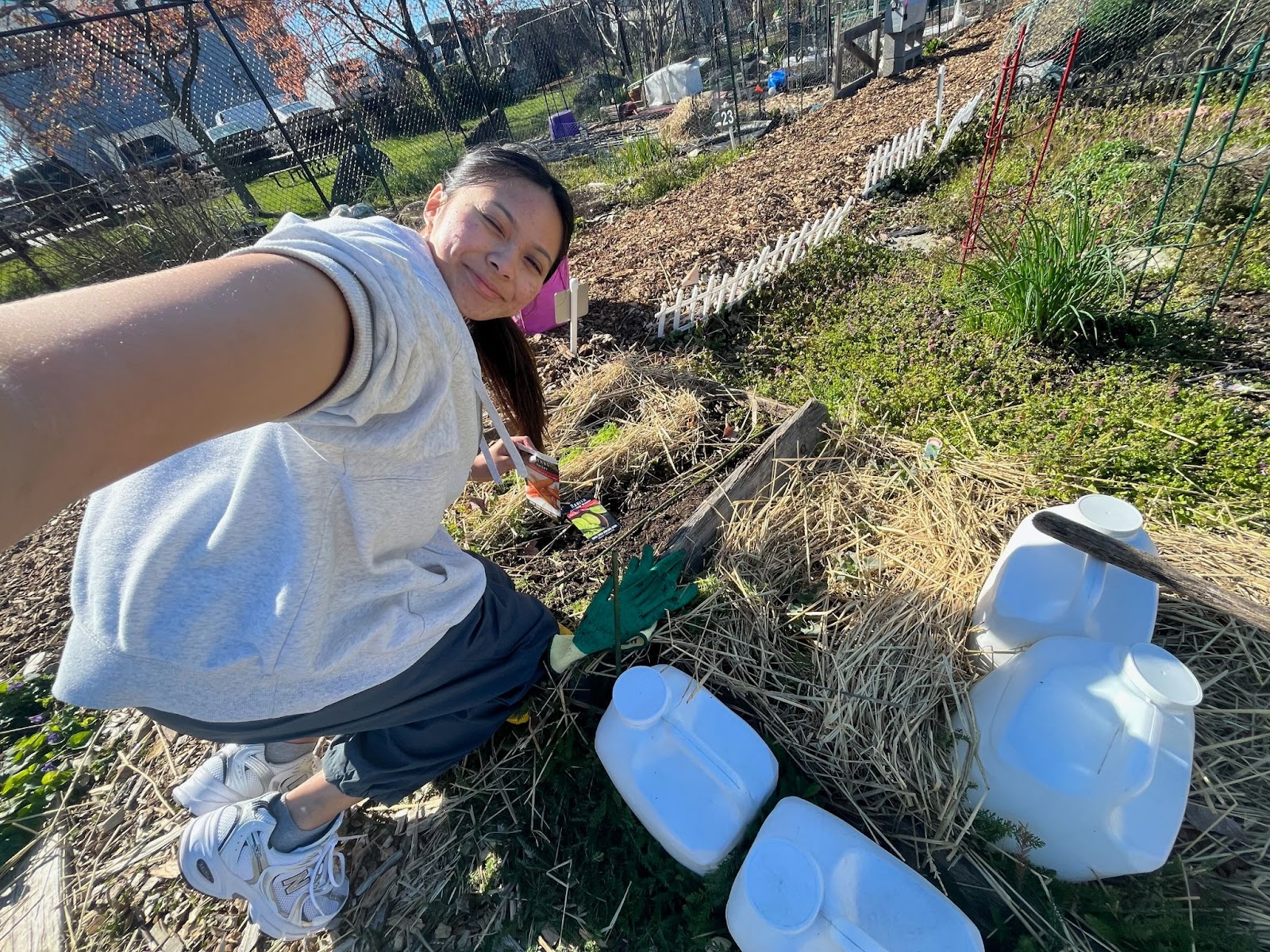
Throughout the spring semester as an editorial intern at the Washington Gardener Magazine, I had the pleasure of learning how to plant, monitor, care for, and harvest radishes and carrots.
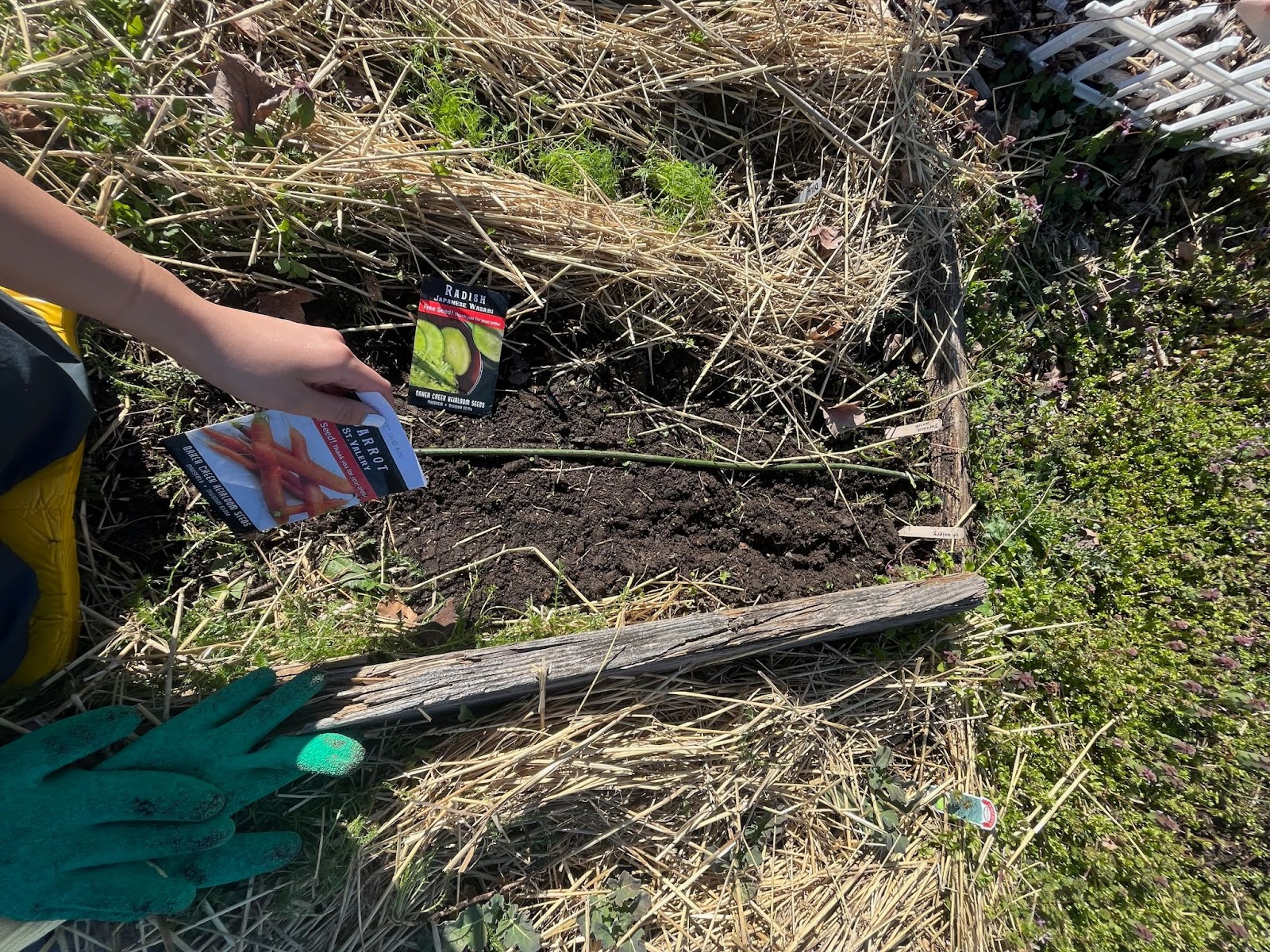
My experience in gardening was little to none prior to being an intern with this publication, but I got to witness the wonderful growth of my plants, albeit small. Due to tricky weather, I initially planted them a little later than expected. The seeds are planted are Carrot 'St. Valery' and Radish 'Japanese Wasabi' -- both from Baker Creek Heirloom Seeds.
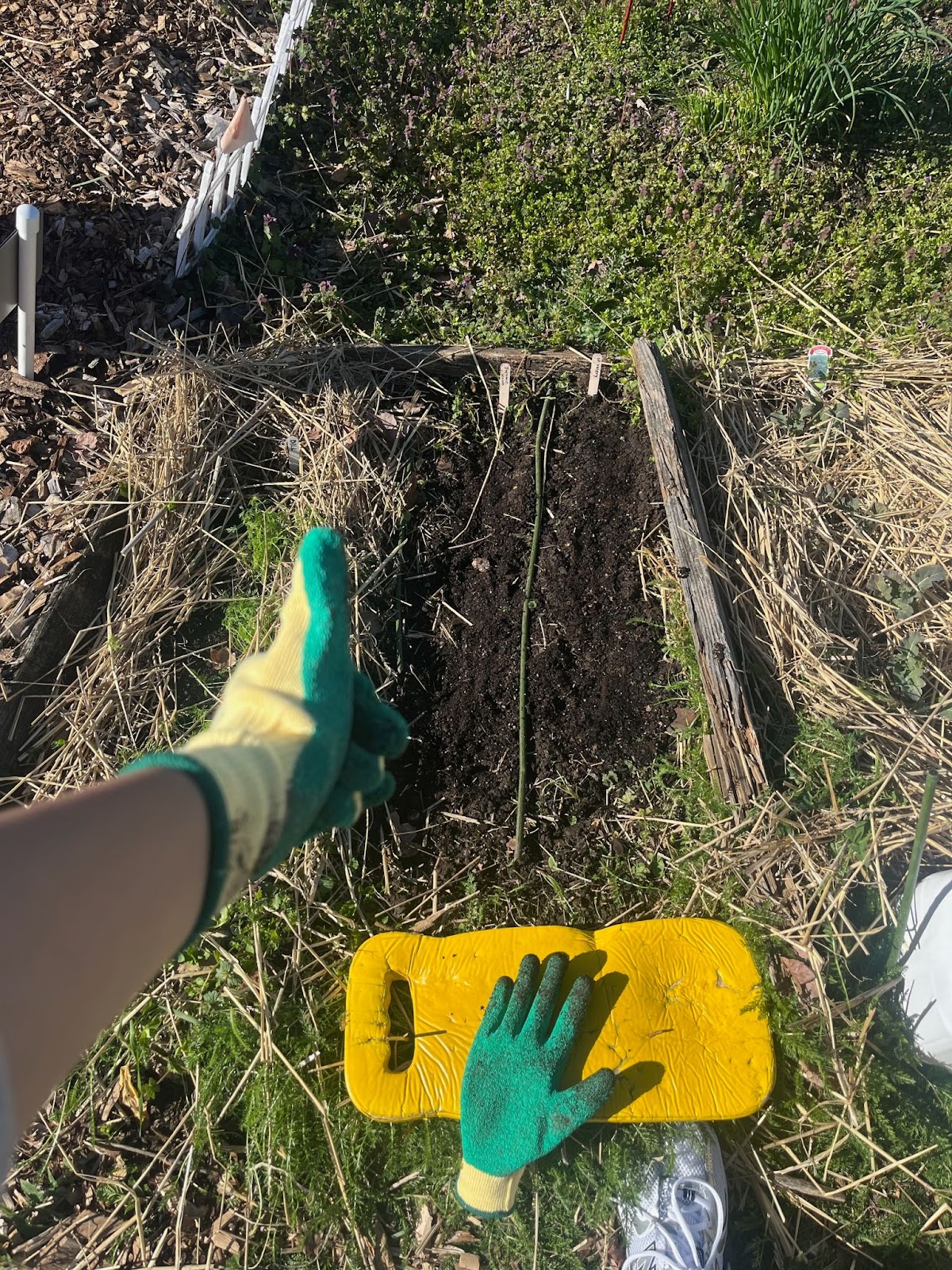
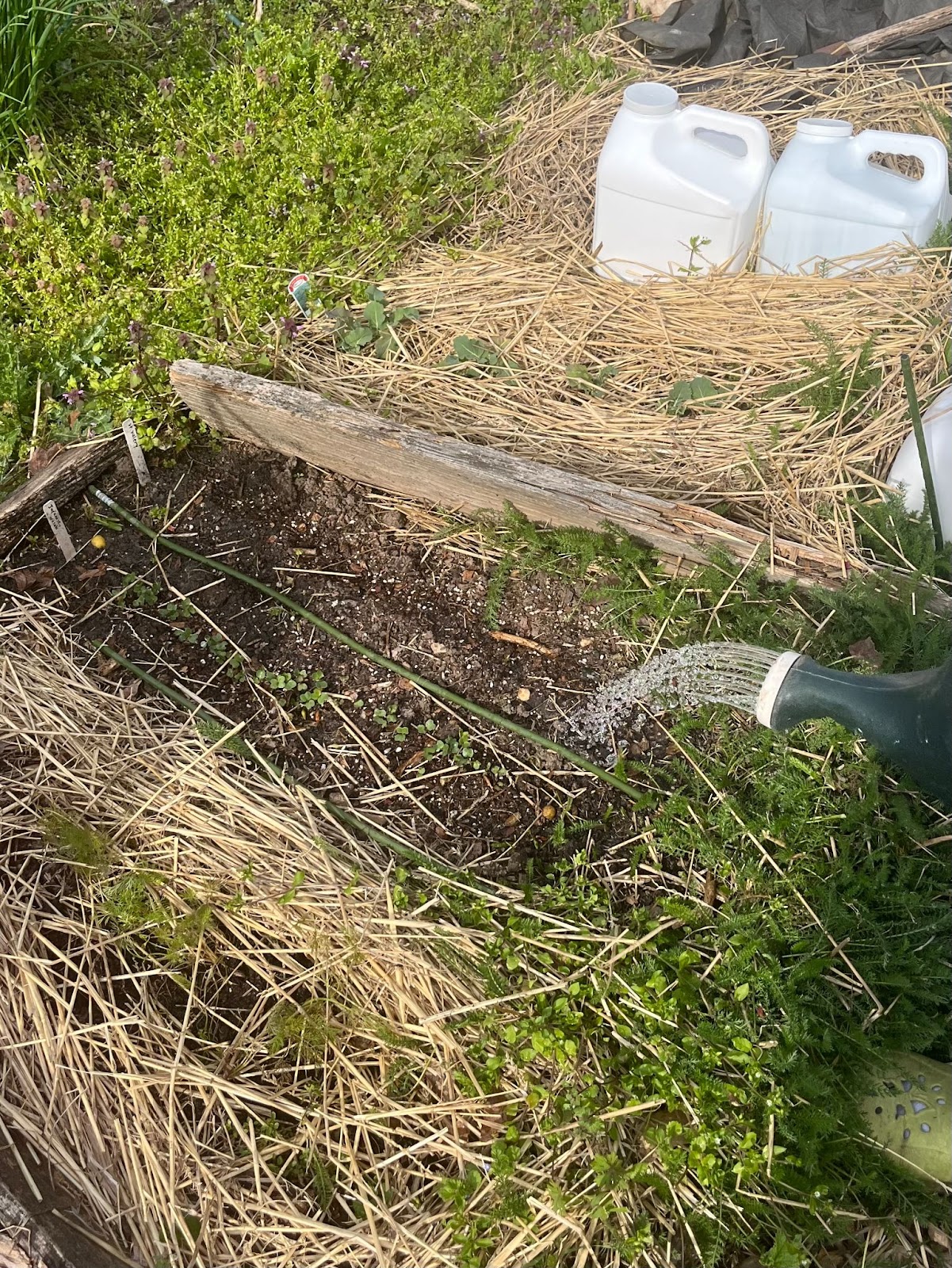
I first planted seeds in their respective spaces in the plot on March 25th:
The left side of the divide are the radishes, and on the right are the carrots. I placed more than a few seeds an inch or so apart, in case a few of them failed to sprout.
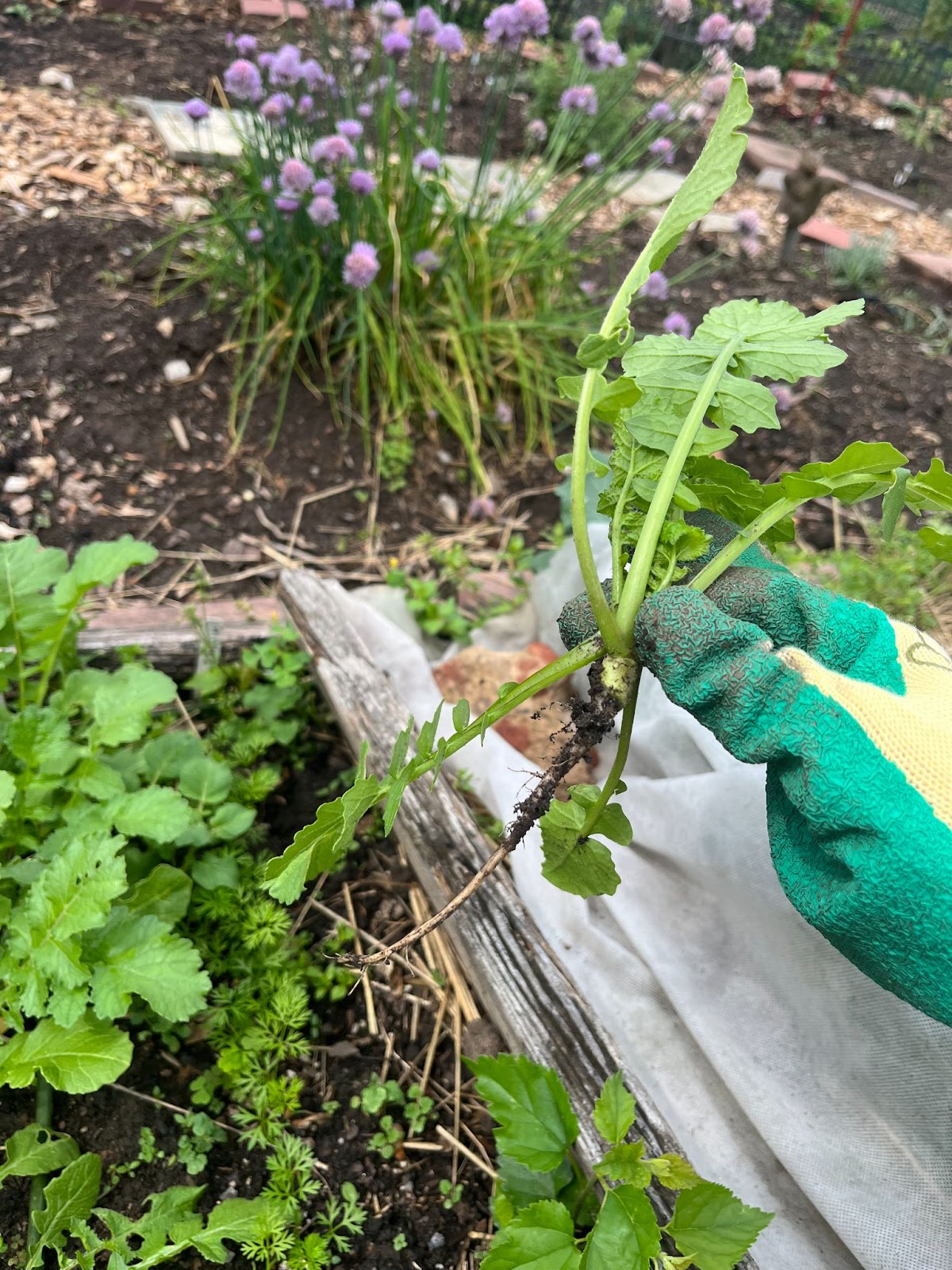
By April 8th, I found that the radishes and carrots were beginning to sprout! However, along with them were Yarrow plants that began to creep into the planting beds from the plot's borders. I removed the encroaching Yarrow and also thinned both tiny seedling crops — as it turned out, there were many more effective seeds than I had originally anticipated.
From then until the end of the month, I did the occasional check-in, which mostly involved watering, thinning, and weeding. During that time frame, the weather seemingly flipped between being rainy and sweltering hot.
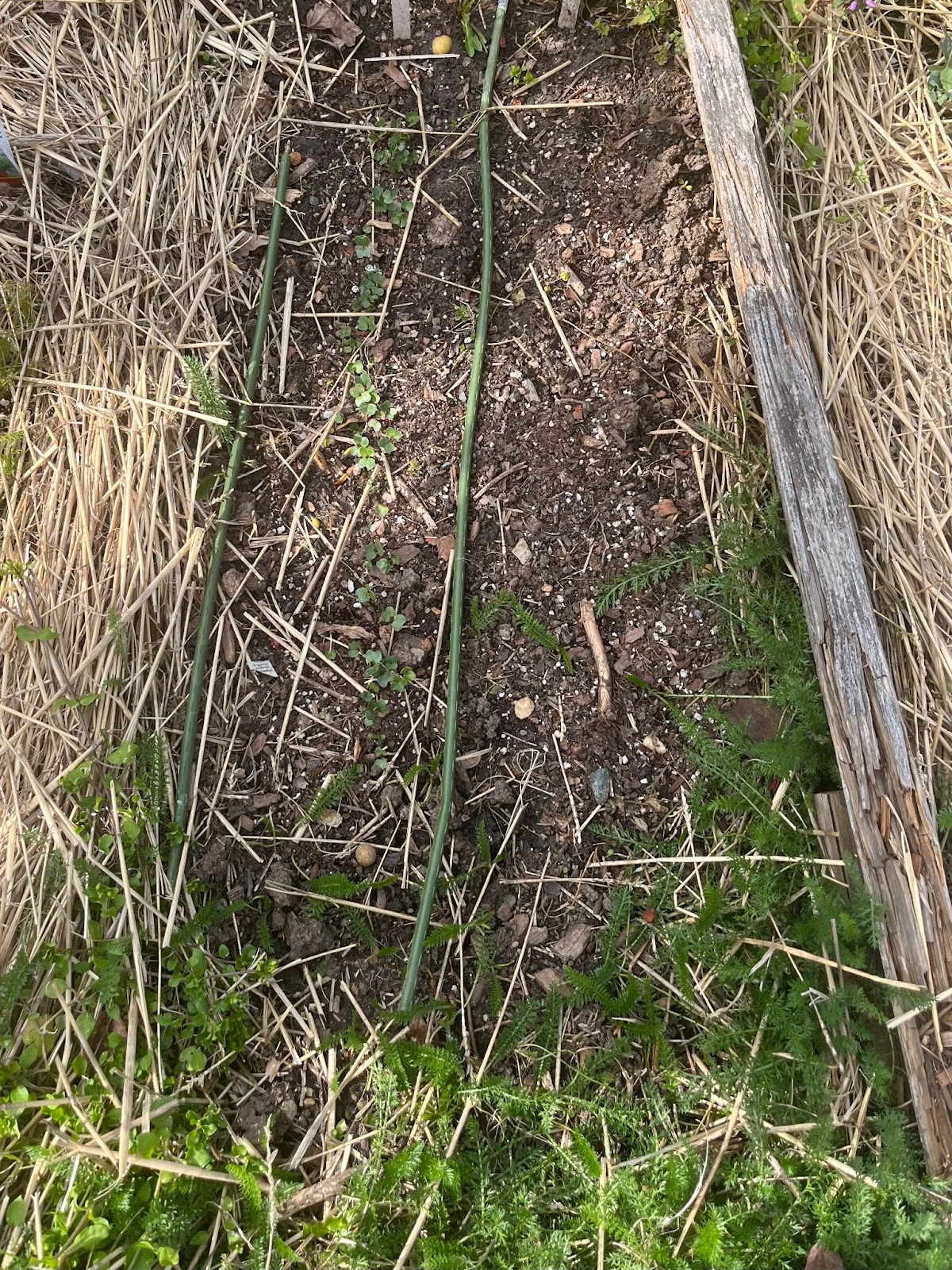
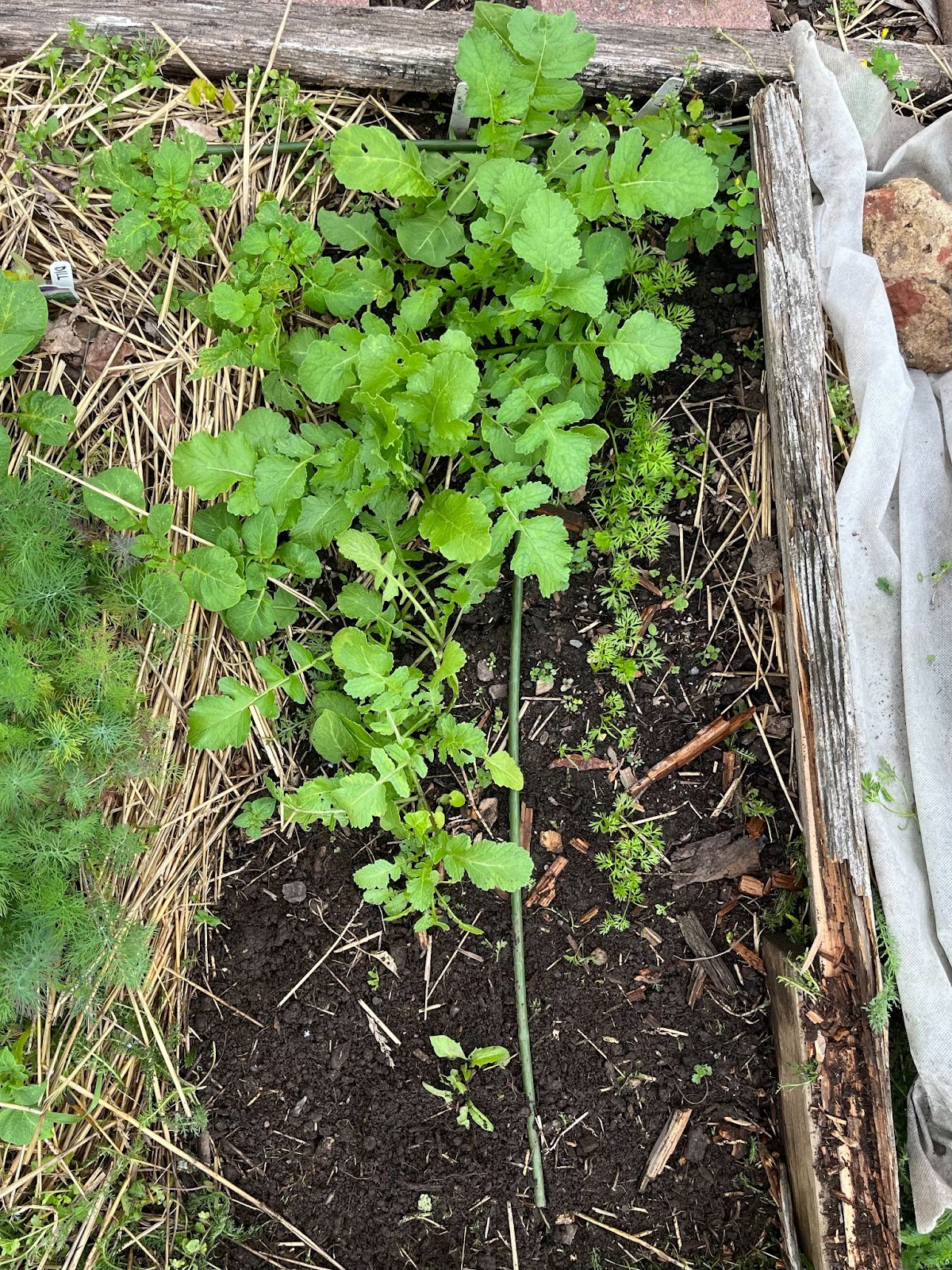
When I visited the plot a month later on May 6th, I witnessed great growth — the radish tops were healthy and green -- and the carrot greens made their gradual slow appearance.
I noticed that the growth near the bottom end of the plot
—where the yarrow weeds once were— was significantly less than the plot’s top
end. Baby radishes began to form and were harvestable by the time our semester
ended.
What are you growing in your edible garden this week?
About Fenton Friday: Every Friday during the growing season, I'll be giving you an update on my community garden plot at the Fenton Street Community Garden just across the street from my house in zone 7 Mid-Atlantic MD/DC border. I'm plot #16. It is a 10 ft x 20 ft space and this is our 13th year in the garden. (It opened in May 2011.) See past posts about our edible garden by putting "Fenton" into the Search box above (at the top, left on this blog).
About the Author:
Hannah Zozobrado was an editorial intern with Washington Gardener Magazine during the Spring 2024 semester.
Black chokeberry (Aronia melanocarpa previously known as Pyrus melanocarpa and Photinia melanocarpa) and red chokeberry (Aronia arbutifolia) are deciduous shrubs that are native to eastern North America and bear fruits that are eaten by birds and other wildlife.
These shrubs have three seasons of interest with showy white flowers in the spring, fruits in late summer, and vibrant foliage in the fall. The plants are self-pollinated, but are also pollinator-friendly and attractive to bees, butterflies, and ants. Both kinds of chokeberry shrubs grow to about 3 to 6 feet wide and high. They are hardy to USDA Zones 3 to 9. They reproduce from seed and sending up suckers, which you can prune out or dig and plant elsewhere. They tolerate some shade and prefer moist sites, but will grow in drier soils as well. In the landscape, they can be used in mass plantings for erosion control and windbreaks. Chokeberry can also be grown as an edible fruit crop for humans. However, the fruit is too astringent to be eaten raw. It is normally prepared in baked goods and made into jams, jellies, syrup, tea, juice, and wine. Note that Aronia or Chokeberry is NOT the same as Chokecherry (Prunus virginiana). There are some selected Chokeberry cultivars available commercially that are more compact and better-behaving for the garden setting. They include ‘Autumn Magic’, ‘Viking’, ‘Nero’, and ‘Iroquois Beauty’. Aronia: You Can Grow That! The video was produced by Washington Gardener Magazine as part of our Plant Profile series for Mid-Atlantic USA gardeners. Audio and text by Kathy Jentz Video by Cassie Peo ➤ If you enjoy this video, please give it a thumbs up and subscribe to our Youtube channel (thank you!) ➤Remember to TURN ON notifications to know when our new videos are out ➤ FIND Washington Gardener Magazine ONLINE ~ WashingtonGardener.blogspot.com ~ http://twitter.com/WDCGardener ~ https://www.instagram.com/wdcgardener/ ~ Facebook.com/WashingtonGardenerMagazine ~ Podcast: GardenDC If you liked this video, we think you will like these other Plant Profiles: ~ Loropetalum:

“But it’s gardening that’s needed here. And that isn’t learned in a day. Gardening, that’s what this place needs.“ ~ Agatha Christie - “A Murder is Announced”

~ GardenDC Podcast Episode 46: Garden Clubs in the 21st Century
https://washingtongardener.blogspot.com/2021/02/gardendc-podcast-episode-46-garden.html
~ GardenDC Podcast Episode 167: Flinging with the Garden Tourist
https://washingtongardener.blogspot.com/2023/09/gardendc-podcast-episode-167-flinging.html
~ GardenDC Podcast Episode 32: Garden Tours
https://washingtongardener.blogspot.com/2020/10/gardendc-podcast-episode-32-garden.html
This episode is archived at:
https://podcasters.spotify.com/pod/show/gardendc/episodes/Local-Garden-Tours-e2jfkpg
BTW, YOU can become a listener supporter for as little as $0.99 per month!
See how at: https://podcasters.spotify.com/pod/show/gardendc/support.
SHOW NOTES will be posted after 5-14-2024.
Episode Credits:
Host and Producer: Kathy Jentz
PIN THIS FOR LATER!
The holiday season is here and I bet you have a gardener on your gift list, so we've updated our annual a Holiday Gifts for Gardener...