Saturday, March 12, 2022

GardenDC Podcast Episode 95: Willows


In this episode, we talk Michael Judd of Ecologia Design about all things related to willows. The plant profile is on Primroses and I share what's going on in the garden as well as some upcoming events.

BTW, YOU can become a listener supporter for as little as $0.99 per month! See how at: https://anchor.fm/gardendc/support.

Show Notes: 1:05 Meet Michael Judd of Ecologia Design and learn all about willows! 1:35 “It’s all willows right now.” — Michael talks about his garden 4:09 “ ‘Easy’ is going to be the word of this episode.” — Kathy 4:46 Michael talks about Ecologia Design’s site near Frederick, MD — “It’s quite a spectacular spot!” 6:17 Michael describes the willow arch at the entrance of Ecologia Design’s food forest 7:07 Willows are important for bees! 9:45 Male deers will rub on willows during the winter 11:12 Michael describes the look of willows after pollarding as a “funky hairdo” 13:33 “A lot of what I’m doing with the willows is to sort of re-enliven the culture of basketry.” — Michael 14:42 “The willow really is one of the most resilient regenerative species we have to work with.” — Michael 15:45 Kathy and Michael discuss the many uses of willows 17:31 Michael talks about the many types of willows — “There’s really an endless selection of willows.” 23:35 “Getting to know your willows a little bit can be helpful.” — Michael 24:14 Michael talks about pussy willows — “The Japanese ones are gorgeous!” 25:31 Birds love willows! 26:50 “Plants really like to be worked when it’s cool and moist.” — Michael 30:22 “I just love the look of a huge, old weeping willows.” — Kathy 33:21 Michael talks about the willows he’s growing now — “I feel like I’m so in love with so many of them.” 40:53 How to contact Michael 43:48 Learn about the primrose in this week’s Plant Profile! 45:18 What’s new in the garden: blooming ‘Jane’ saucer magnolia and daffodils! 46:02 News in the gardening world: upcoming plant sales 47:27 Look forward to “The Urban Garden: 101 Ways to Grow Food and Beauty in the City” by Teri Speight and Kathy 48:20 Celebrate spring at the National Garden Bureau online book party

If you liked this episode, you may also enjoy listening to:

~ GardenDC Podcast Episode 25: Michael Judd of Ecologia Design on growing Paw Paws

https://washingtongardener.blogspot.com/2020/08/gardendc-podcast-episode-25-michael.html

~ Plant Profile: Native Pussy Willows (Salix discolor)

https://washingtongardener.blogspot.com/2020/03/plant-profile-pussy-willows-salix.html


We welcome your questions and comments! You can leave a voice mail message for us at: https://anchor.fm/gardendc/message Note that we may use these messages on a future episode.

And be sure to leave us a 5-star review on your favorite platform so other gardeners can find us too!

Episode Credits:
Host and Producer: Kathy Jentz
Editing and Show Notes: Dorvall Bedford

PIN THIS FOR LATER!

Thursday, March 10, 2022

Heaths and Heathers Plant Profile


Heaths and Heathers Plant Profile

Heaths (Ericas) and heathers (Callunas) are members of the Ericaceae family. They are evergreen, with bell-like flowers, and share similar cultural needs. Winter-blooming heathers, the Ericas, are called heaths. The Heaths have needle-like leaves in whorls, while the Heathers have scale-like leaves, similar to junipers.

The flower colors range from white through light pink, into deep pinks, reds, and purples. The foliage comes in a wide range of green and bronze tones. They do well in rock gardens and on slopes. They are often used in groupings as a ground cover as well as a small specimen shrub at the front of a border or in containers.

They prefer acid soils like their relatives in the Ericaceae family -- the rhododendrons, azaleas, and blueberries. They are generally hardy to USDA Zones 4-7.

The best time to plant them is in early spring or fall to give them plenty of time to get established before the extreme heat or cold sets in. Water them well for their first year and keep them mulched. They are fairly drought-tolerant once established and do not require fertilizer.

Winter-blooming heaths need four things: good air circulation, excellent drainage, acid soil (a pH range of 4.5-6), and at least six hours of sun. They also like protection from drying winter winds and afternoon shade in hot regions.  

Heaths and Heathers can be found all over the world, except Antarctica. The Ericas we grow in our gardens come mainly from Western Europe and the Mediterranean.

Heaths and Heathers look great combined in the landscape with Witch Hazels, dwarf conifers, Crocus, Daffodils, Winter Aconite, Hellebores, and Snowdrops.

Prune just as this year’s flowers are ending and sheer them back all over for a fuller, more compact look. Cutting back at a later time results in the loss of blooms.

Heaths and Heathers are considered deer-resistant. They are loved by bees and are a great source of nectar in late winter.

Heaths and Heathers : You Can Grow That!

The video was produced by Washington Gardener Magazine.

Audio, Photos, and Text by Kathy Jentz

Video and Editing by Hojung Ryu


➤ If you enjoy this video, please give it a thumbs up and subscribe to our Youtube channel (thank you!)

➤Remember to TURN ON notifications to know when our new videos are out

➤ FIND Washington Gardener Magazine ONLINE

~ WashingtonGardener.blogspot.com

~ http://twitter.com/WDCGardener

~ https://www.instagram.com/wdcgardener/

~ Facebook.com/WashingtonGardenerMagazine

~ Podcast: GardenDC

 PIN THIS FOR LATER:


Monday, March 07, 2022

Saturday, March 05, 2022

GardenDC Podcast Episode 94: Magnolias

In this episode, we talk with Andrew Bunting, Vice President of Public Gardens and Landscapes at the Pennsylvania Horticultural Society, all about magnolias. The plant profile is on Heaths and Heathers and I share what's going on in the garden as well as some upcoming events.

BTW, YOU can become a listener supporter for as little as $0.99 per month! See how at: https://anchor.fm/gardendc/support.
Show Notes: 1:01 Meet Vice President of Public Gardens and Landscapes Andrew Bunting from the Pennsylvania Horticultural Society! 1:35 Signs of spring Andrew is noticing 2:23 “We’ve been kind of teased into thinking that spring should start in February…” — Andrew 3:06 Andrew talks about the earliest blooming magnolias 3:53 What most people think are petals on magnolias are actually tepals! 4:27 Magnolia stellata can be the size of a shrub or tree 7:03 “If I was going to pick 10 of my favorite magnolias, ‘Wada's Memory’ would be one of them.” — Andrew 7:44 Many magnolias are early bloomers 9:11 “If you could only grow one magnolia, it would have to be the saucer magnolia.” — Andrew 10:22 Kathy describes the saucer magnolias at the Enid A. Haupt Garden in DC 11:39 Andrew lists public gardens where you can see magnolias 15:02 Common names can be confusing 16:17 Andrews mentions magnolias called ‘The Girls’ 17:34 “Pinkie… that’s one of my favorites.” — Kathy 18:29 There is a ‘Star Wars’ Magnolia! 21:31 “For a long period of time, the yellow magnolias were kind of the Holy Grail of the magnolia world.” — Andrew 22:54 Yellow magnolias can be very tall! 24:43 “If you were to collect all the yellow magnolias today, there’s got to be 75 different ones.” — Andrew 26:13 Andrew describes a magnolia tree with a fruity scent 27:58 Magnolia trees native to North America have tropical leaves 30:01 Andrew mentions tall magnolias — “The wild Magnolia grandiflora can get over a hundred feet tall.” 31:38 Magnolias can be found all over the world! 31:12 Kathy and Andrew discuss the “dry shade” caused by evergreen magnolias 36:23 Are deer a problem? 37:56 The real pest issue — magnolia scale 38:39 Kathy and Andrew discuss pruning magnolias and espalier 41:41 Kathy says she’s going to add the ‘Star Wars’ magnolia to her collection 43:43 Learn about Heath and Heathers in this week’s Plant Profile! 46:08 What’s new in the garden: ‘February Gold’ daffodils bloom and the interns planted seeds! 47:00 News in the gardening world: Maryland Home & Garden Show, Longwood Gardens opens restored Orchid House, cherry blossom peak bloom coming soon 49:01 Look forward to “The Urban Garden: 101 Ways to Grow Food and Beauty in the City” by Teri Speight and Kathy 49:55 Celebrate spring at the National Garden Bureau online book party

If you liked this episode, you may also enjoy listening to:

GardenDC Episode 60: Hydrangeas with Andrew Bunting
GardenDC Episode 6: Spring-Flowering Trees and Shrubs

We welcome your questions and comments! You can leave a voice mail message for us at: https://anchor.fm/gardendc/message Note that we may use these messages on a future episode.

And be sure to leave us a 5-star review on your favorite platform so other gardeners can find us too!

Episode Credits:
Host and Producer: Kathy Jentz
Editing and Show Notes: Dorvall Bedford

PIN THIS FOR LATER!

Friday, March 04, 2022

Fenton Friday: A New Season in the Community Garden Plot


It is our first week back at the community garden and here is what has wintered over for us. We have the strawberry and asparagus bed looking in fine shape. The garlic planted last fall is up and looking good. The "dwarf' thornless blackberry is starting to sprout new leaves and needs serious pruning. About a quarter row of spinach and a similar amount of arugula have survived under a row cover. (The bok choy I hoped would stick around has not.) Some of the perennial herbs like yarrow and chives are rebounding in the early spring warmth.

The mustard green cover crop is dying back as planned and revealed an underplanting of 'White Egg' turnips that I had forgotten all about. The turnips are beyond the point of harvesting and will make good compost at this point.

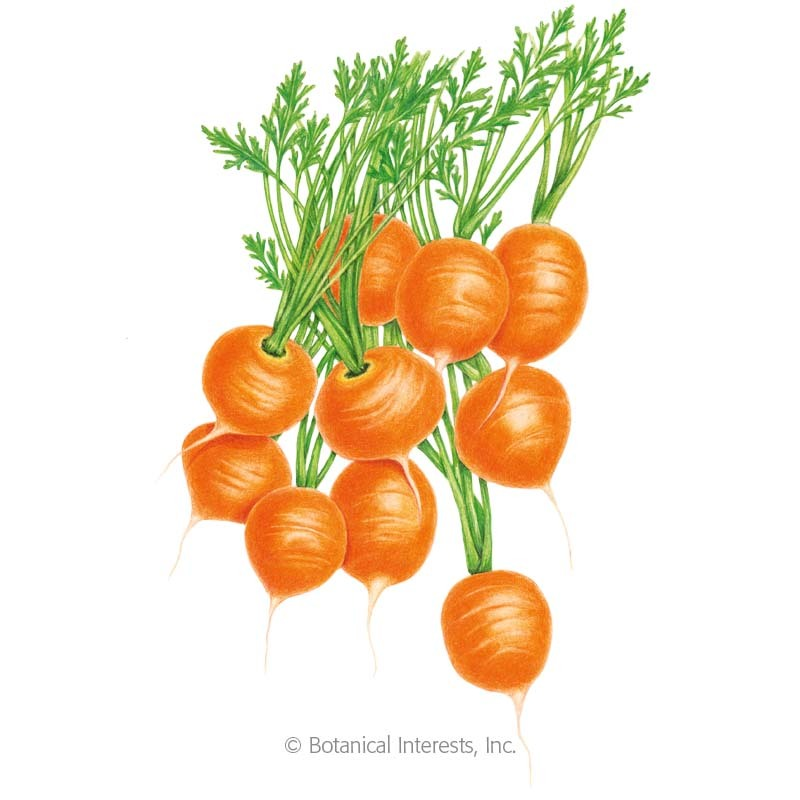
The two interns planted seeds this week for three crops -- an organic salad bowl mix that we are trying in both a container and a row in the ground, along with a row of Radish 'Rudolf' alongside a row of 'Tonda di Parigi' Carrots. These last two I got from Botanical Interests and am eager to see how they do for us -- especially the small, round carrots.

In a week or so, I plan to plant our peas and maybe add some other types of early greens and cool-season herbs. Are you back in your edible garden yet? If so, what are you growing?

About Fenton Friday: Every Friday during the growing season, I'll be giving you an update on my community garden plot at the Fenton Street Community Garden just across the street from my house in zone 7 Mid-Atlantic MD/DC border. I'm plot #16. It is a 10 ft x 20 ft space and this is our 11th year in the garden. (It opened in May 2011.) See past posts about our edible garden by putting "Fenton" into the Search box above.

Snapdragon Plant Profile

Snapdragon Plant Profile

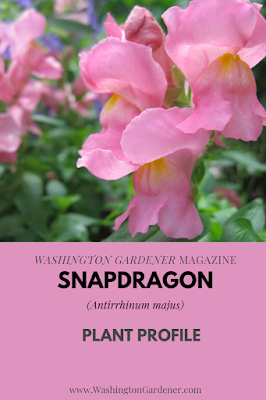
Snapdragon (Antirrhinum majus) are a cool season annual (sometimes a tender perennial) like pansies and violas that bloom in the shoulder seasons (early spring and late fall). They stop blooming through the coldest part of winter, but often hold on to their green foliage for us here in the Mid-Atlantic. They are hardy to USDA zones 7 to 10.

Snapdragons make excellent container plants and their flowers are available in a wide range of colors from creamy whites, oranges, and yellows to rosy pinks and purples. They also come in a variety of heights from dwarf to mounding or trailing to quite tall.

The common name "snapdragon", originates from the flowers' reaction to having their throats squeezed, which causes the "mouth" of the flower to snap open like a dragon's mouth.

They are native to the Mediterranean region and the fragrant flowers are attractive to pollinators including hummingbirds, bumble bees, and other large bees. The flowers have a long vase life, making them an excellent cut flower choice as well.

Snapdragons are low-care. Just plant them in a sunny spot and make sure they do not entirely dry out. Mulching, fertilizing, and regularly snipping off their spent blossoms can help them stay healthy and more floriferous.

And, oh yeah, they are deer-resistant! That makes them pretty useful among other cool-season annuals that are practically deer- and rabbit-candy. So, if you have a bare spot in a bed or container in the cooler gardening months, think about adding snapdragons.

Snapdragon: You Can Grow That!


The video was produced by Washington Gardener Magazine.

Audio, Photos, and Text by Kathy Jentz

Video and Editing by Hojung Ryu

  Footage gathered at Brookside Gardens, Wheaton, MD.


➤ If you enjoy this video, please give it a thumbs up and subscribe to our Youtube channel (thank you!)

➤Remember to TURN ON notifications to know when our new videos are out

➤ FIND Washington Gardener Magazine ONLINE

~ WashingtonGardener.blogspot.com

~ http://twitter.com/WDCGardener

~ https://www.instagram.com/wdcgardener/

~ Facebook.com/WashingtonGardenerMagazine

~ Podcast: GardenDC

 PIN THIS FOR LATER!

Wednesday, March 02, 2022

Peak Bloom is Coming Soon for DC's Famous Cherry Blossoms

Mayor Muriel Bowser at the Cherry Blossom Festival kick-off event.
By Dorvall Bedford

Springtime is on its way, and that means so are the cherry blossom flowers! Editor Kathy Jentz and I were able to attend the opening press event for the National Cherry Blossom Festival on the terrace floor of the 1331 Maryland Apartments building, which had a stunning view of the Jefferson Memorial and the Washington Monument. Though the room where it took place was quite small, it was packed with government officials, representatives from the Embassy of Japan, and many reporters.

Before all the announcements and speeches, they provided officials and reporters alike with pastries and drinks. And once the event really began, they announced upcoming events like the Blossom Kite Festival and the second annual Petal Porch Parade, which Washington Gardener Magazine plans to participate in again,


But you’re probably wondering about one thing: the actual cherry blossoms. Rest assured, National Park Service Superintendent Jeffrey Reinbold announced when the peak bloom of the cherry blossoms will happen soon. After an amusing performance by a juggler dressed in pink from her hair down to her toes, Reinbold said March 22 to 25 will be the time of peak bloom (if the weather over the next 3 weeks cooperates).


There was also another interesting announcement that happened during the event. Ryo Kuroishi from the Embassy of Japan said that 2022 marks the 110th anniversary of Tokyo gifting the cherry trees to Washington, DC. Kuroishi said the trees have become a lasting symbol for the friendship between the U.S. and Japan as well as the root for springtime celebrations.


“I’m sure that when people gathered at the Tidal Basin in 1912 to plant the first tree, they had no idea what an impact the effort would make,” he said in his speech.


I was able to talk to Mike Litterst, spokesperson for the National Mall, who told me about what goes into taking care of the cherry blossom trees. The National Park Service has a full-time arborist and tree crew responsible for mulching, pruning, watering, and more. Litterst said taking care of the trees is not too different from what people do with trees on their own property, but just on a larger scale.


And when he said larger scale, he meant over 3,700 trees!


The National Park Service receives money from different sources to pay for all the maintenance, according to Litterst. Part of it comes from their operating budget while other money comes from the fundraising efforts of partners like the Trust for the National Mall and the National Cherry Blossom Festival.


I spoke to President Diana Mayhew of the National Cherry Blossom Festival, who said they’re trying to raise $1000 for every tree this year through the Endow a Cherry Tree Campaign. People can adopt one of the many cherry trees, which Mayhew said you could do for an anniversary, special occasion, or to honor someone.


Litterst said people can also help keep the cherry trees safe by not picking the blossoms, climbing the trees, and staying on paths when they can.


Now that it’s been announced when the cherry blossoms will bloom, it’s time to start planning your trip to the Tidal Basin. I know I’ll be there when the flowers are out!

Also, be sure to check out our popular post on "17+ Cherry Blossom Viewing Alternatives in the DC Region" for other places to visit blossoming cherry trees in the DC-region.


About the Author:
Dorvall Bedford is a journalism major at the University of Maryland, College Park, and an intern this semester with Washington Gardener. He is a native of Frederick, MD.

Featured Post

Holiday Gifts for Gardeners ~ Top Gardening Gifts ~ 21+ Cool Gardening Gift Ideas

The holiday season is here and I bet you have a gardener on your gift list, so we've   updated   our annual Holiday Gifts for Gardeners ...

Most Popular Posts