It has been another weird weather week at my Fenton Community Garden plot. Two days that hit near or over 90 degrees and then yesterday brought a deluge -- over 2 inches of rain overnight.
Now, I'm getting word of a frost-alert for the next few nights, which means I'll be running over to cover and uncover the tender plants each morning and night.
It has been so hectic with various spring garden events that the only thing I was able to do in the plot so far was to "thin" the 'French Breakfast' radishes. The thinnings are pictured here and I've already eaten about 10 of them before taking the photo.
The only other thing I accomplished in my plot was a bit of weeding as some kind of thistle has exploded and I would to grab them now before their long taproots became established.
The strawberries are ripening up so I'm keeping an eagle eye on them to beat any slugs or ants to the punch. I cannot wait to have them with my morning cereal!
I have a long to-do list for the plot that I hope to tackle early next week including planting my tomatoes, starting okra and melon seeds, and putting in a lisianthus flower border from plugs I bought from a local cut flower grower.
What is growing in your edible garden this week?
Friday, May 16, 2014
Catch Me If You Can... Where to find Washington Gardener Magazine This Weekend and beyond
April-May-June is a crazy-busy time for local gardening and no less so for Washington Gardener Magazine! I will be at the following events over the next week or so. I will have subscription cards and the current magazine issue with me so when you see me, you will be able to subscribe on the spot.
~ Saturday May 17, 9am-3pm
Spring Garden Day: The Big Plant Sale at Green Spring Gardens Park (4603 Green Spring Road) and find rare and unusual plants from more than 40 vendors. Find Washington Gardener Magazine under the shade of the big tree by the Visitor's Center. Friends of Green Spring (FROGS) members receive 10% off new Washington Gardener subscriptions.
Event details: http://www.fairfaxcounty.gov/parks/greenspring/.
~ Sunday, May 18, 12n-2pm
Spring Plant Exchange on May 18 at Heffner Park in Takoma Park, MD. Bring your garden extras and take home new-to-you plants. You must be a club member to participate, but you can join at the event for just $12.
Event details: http://takomahort.org/
~ Sunday, May 18, 2-5pm
10th Annual Shepherd Park Garden Tour in Shepherd Park, DC near Takoma, DC and Silver Spring, MD.A self-guided tour of eight of the loveliest gardens in the area. The gardens of Shepherd Park, Colonial Village, and North Portal Estates offer a superb combination of beauty, creativity, elegance, and originality. Gardens of all sizes will be featured–from the small city garden to the large estate, from the easily obtainable to the dream.
Event details: http://www.shepherdpark.org/garden.html
~ Monday, May 19, 7:30-9:30pm
~ Tuesday, May 20 at 6-9pm
GreenDrinksDC Happy Hour at Local 16 DC, 1602 U Street NW, Washington, District of Columbia 20009. Double 10-min SPOTLIGHT SPEAKERS: Kathy Jentz, Editor and publisher of Washington Gardener Magazine, and Ian Fisk, Exec. Dir. of the William James Foundation. Network with over 1,260 "GreenDrinkers" in DC. No cover charge/membership fee. Drink specials. Drinks not literally green, but the people are a pale shade of chartreuse. "Are you Green?"
Event details: https://www.facebook.com/groups/2398457524/
~ Wednesday, May 21, 5:30-7:30pm
GoodGreenFun Happy Hour with Silver Spring Green at Mi Rancho in downtown Silver Spring, MD.
Event details: http://silverspringgreen.com/
SAVE THE DATE:
~ May 31-June 1 weekend
DC Green Festival - see Washington Gardener Magazine at our booth and visit 100s of green companies at the DC Convention Center.
Event details: http://www.greenfestivals.org/
PS I will have FREE DC Green Festival passes to give away to Washington Gardener Magazine readers look out for details on that next week!
~ Saturday May 17, 9am-3pm
Spring Garden Day: The Big Plant Sale at Green Spring Gardens Park (4603 Green Spring Road) and find rare and unusual plants from more than 40 vendors. Find Washington Gardener Magazine under the shade of the big tree by the Visitor's Center. Friends of Green Spring (FROGS) members receive 10% off new Washington Gardener subscriptions.
Event details: http://www.fairfaxcounty.gov/parks/greenspring/.
~ Sunday, May 18, 12n-2pm
Spring Plant Exchange on May 18 at Heffner Park in Takoma Park, MD. Bring your garden extras and take home new-to-you plants. You must be a club member to participate, but you can join at the event for just $12.
Event details: http://takomahort.org/
~ Sunday, May 18, 2-5pm
10th Annual Shepherd Park Garden Tour in Shepherd Park, DC near Takoma, DC and Silver Spring, MD.A self-guided tour of eight of the loveliest gardens in the area. The gardens of Shepherd Park, Colonial Village, and North Portal Estates offer a superb combination of beauty, creativity, elegance, and originality. Gardens of all sizes will be featured–from the small city garden to the large estate, from the easily obtainable to the dream.
Event details: http://www.shepherdpark.org/garden.html
~ Monday, May 19, 7:30-9:30pm
Garden Photography Talk hosted by the SILVER SPRING GARDEN CLUB at Montgomery College Takoma Park/Silver Spring Campus Health Sciences Center Building Room 222 in downtown Silver Spring, MD.
Event details: http://silverspring.patch.com/groups/events/p/garden-photography-talk-hosted-by-the-silver-spring-garden-club
~ Tuesday, May 20 at 6-9pm
GreenDrinksDC Happy Hour at Local 16 DC, 1602 U Street NW, Washington, District of Columbia 20009. Double 10-min SPOTLIGHT SPEAKERS: Kathy Jentz, Editor and publisher of Washington Gardener Magazine, and Ian Fisk, Exec. Dir. of the William James Foundation. Network with over 1,260 "GreenDrinkers" in DC. No cover charge/membership fee. Drink specials. Drinks not literally green, but the people are a pale shade of chartreuse. "Are you Green?"
Event details: https://www.facebook.com/groups/2398457524/
~ Wednesday, May 21, 5:30-7:30pm
GoodGreenFun Happy Hour with Silver Spring Green at Mi Rancho in downtown Silver Spring, MD.
Event details: http://silverspringgreen.com/
SAVE THE DATE:
~ May 31-June 1 weekend
DC Green Festival - see Washington Gardener Magazine at our booth and visit 100s of green companies at the DC Convention Center.
Event details: http://www.greenfestivals.org/
PS I will have FREE DC Green Festival passes to give away to Washington Gardener Magazine readers look out for details on that next week!
Thursday, May 15, 2014
Garden Bloggers' Bloom Day: May Abundance!
This month's Garden Bloggers' Bloom Day is glorious! Spring has finally spring here in the Mid-Atlantic USA (zones 6-7). Since so much is in bloom, I thought I'd share just a few flowers that are new-ish to my garden.
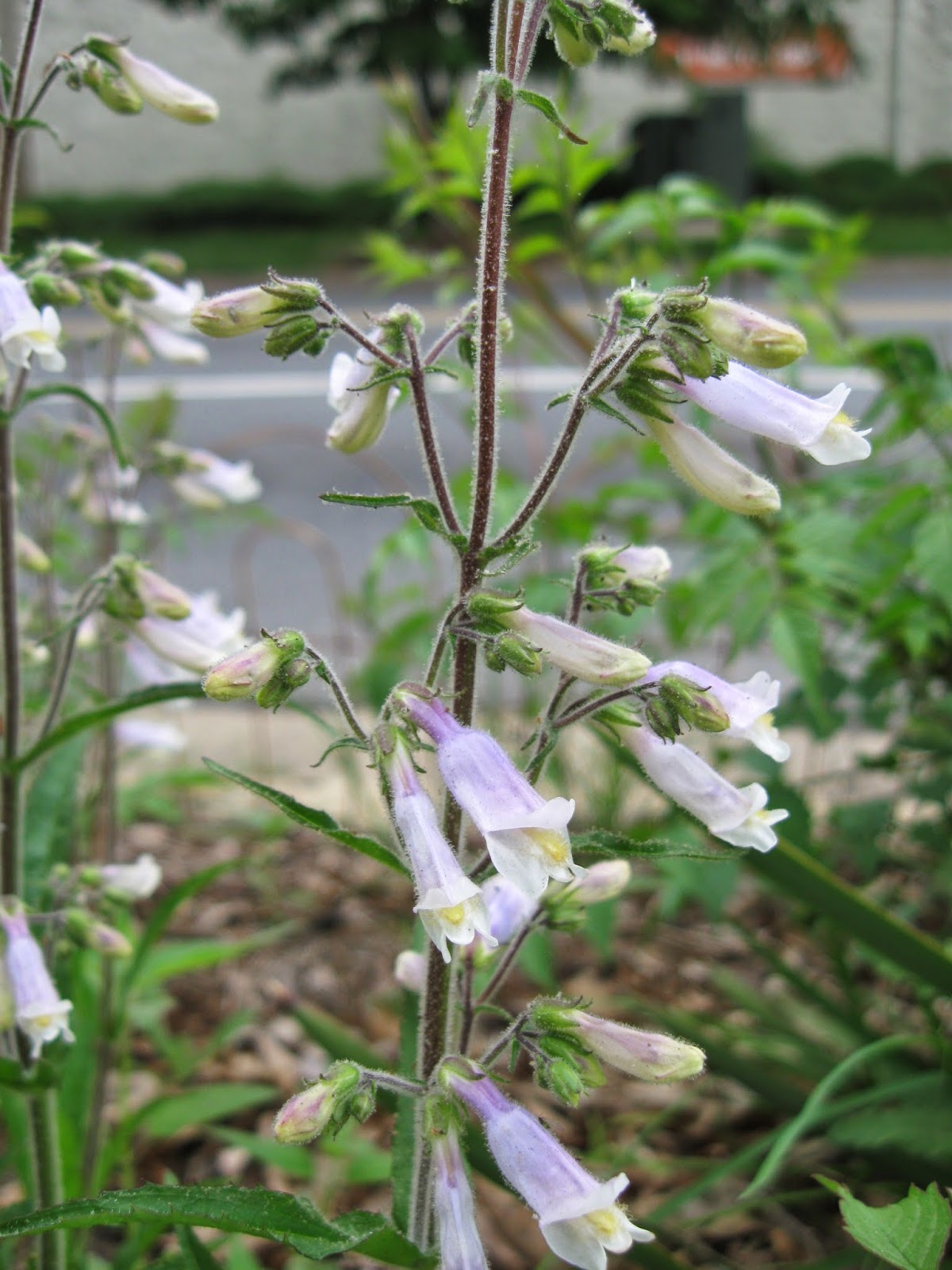
I added the Hairy Beardtongue (Penstemon hirsutus) to my hellstrip last fall as part of my efforts to create a butterfly garden and something that will not get me fined by the county for "not weeding."
I bought this Jacob's Ladder (Polemonium caeruleum) from Melwood at the FONA Garden Fair last year. Confession: it never made it into the ground. Happily though, it seems fine in the original pot and came back with lovely blue blooms -- though most of them got knocked off in yesterday's rains....
The Candytuft (Iberis) was something I ordered from Classic Groundcovers last spring for the Silver Spring Garden Club sale. It did not sell well so I kept one for myself. I think it is quite lovely planted here under a Hydrangea 'Limelight.'
The rest of the garden is bursting with May blooms: Wiegela, Roses, Iris, Epimedium, Euphorbia, Azaleas, and lots of annuals. Just ended are the Lilacs, Tulips, Rhododendrons, Crab apple tree, Lungwort, Lily of the Valley, and many of the spring ephemerals like Dutchman's Breeches.
What is blooming in your garden today?
I added the Hairy Beardtongue (Penstemon hirsutus) to my hellstrip last fall as part of my efforts to create a butterfly garden and something that will not get me fined by the county for "not weeding."
![]() |
| Hairy Beardtongue (Penstemon hirsutus) |
![]() |
| Jacob's Ladder (Polemonium caeruleum) |
![]() |
| Candytuft (Iberis) |
The rest of the garden is bursting with May blooms: Wiegela, Roses, Iris, Epimedium, Euphorbia, Azaleas, and lots of annuals. Just ended are the Lilacs, Tulips, Rhododendrons, Crab apple tree, Lungwort, Lily of the Valley, and many of the spring ephemerals like Dutchman's Breeches.
What is blooming in your garden today?
Wednesday, May 14, 2014
Video Wednesday: Container Gardening Tips
Container gardening is a great solution for homes who want plants and flowers to enjoy but have very little outdoor space.
Christopher D. Mills, a local REALTOR®, with Keller Williams Capital Properties, came and shot this video in my garden last week. We plan to shoot another few videos on urban vegetable growing as well.
Tuesday, May 13, 2014
Native Spotlight: Sedum Ternatum
Guest Blog by Rachel Shaw
Sedum ternatum is an easy to grow shade-loving native groundcover.
| Sedum ternatum in early spring |
One of my favorite groundcovers is Sedum ternatum, native to much of the
eastern U.S. This is a small plant, no more than six inches high including the
flower stalk, which blooms for a few weeks in April or May
in our area. Mine are just coming into bloom now, a little late like many other
things this year.
| Sedum ternatum in flower |
This versatile little evergreen plant likes moist
conditions and part-shade to shade, but is also reasonably drought
tolerant. In my yard it is one of the
few things I have been able to grow under the dry shade of a large silver maple
on a slope, together with the native Pennsylvania sedge, Carex pensylvanica.
| Sedum ternatum and Carex pensylvanica |
Sedum ternatum is easy to transplant. I’ve put some of mine at the edge of my gravel
driveway, where it has filled in nicely, and I’m planning to put some in other
spots around the yard. Just keep in mind that it is not the most rapid of
spreaders, and as the plants are small, it is probably not the best choice for
filling in a large space rapidly. On the other hand, if you decide for whatever
reason that you need to take it out, removal is easy. But my guess is that
you’ll want to spread it around the yard, not get rid of it!
About the Author
Rachel Shaw focuses on vegetable gardening and growing
native plants in her small yard in Rockville, MD. She blogs at http://hummingbirdway.blogspot.com/. This guest blog post is part of a monthly Native Plants series that Rachel will be posting here around the 10th of each month.
Monday, May 12, 2014
Tomato Patch: A Solid Gold investment
In this guest blog series by Bob Nixon, he explores various
tomato varieties and how well they grow in the Mid-Atlantic region. Look
for Tomato Patch posts every Monday for the next few months as our
local tomato season gets underway.
The price of gold may have been less than solid on the commodities
markets in recent months, but my purchase of a packet of 'Solid Gold'
Hybrid seeds from Tomato Growers Supply Co. turned out to be an excellent investment.
I was attracted to 'Solid Gold' because I wanted both a change of pace from the Sweet 100 and Sungold cherry varieties I’d grown in recent years and also a variety that wouldn’t crack after every shower or rain, as Sweet 100 and Sungold usually do.
The Tomato Growers Supply Co. catalog description of Solid Gold seemed just what I was searching for: “Clusters of one-inch long, golden yellow grape tomatoes appear in great numbers through an impressively long-growing season. This plant just seems never to give up! In our trials, it was the first tomato to ripen and the last one to stop producing. The tomatoes are very crack-resistant and once harvested have a long shelf life while retaining their delicious, sweet taste.”
That description turned into reality in the Tomato Patch. I’ve been amazed at the many cascading clusters—most with 16 to 22 tomatoes—growing from the vigorous plants. The first tomato I picked this season was a Solid Gold, and they joined Juliets in the last colander of small tomatoes I picked before frost ended Tomato Patch 2013. Solid Gold did not crack early in season, but about 50% of the fruit did in the last month or so. Shelf-life seems eternal—well, almost—with Solid Gold fruits sitting on our kitchen counter for days sometimes without wrinkling or showing any signs of collapse. When fully ripe, Solid Gold is both sweet and tomatoey, but not candy-sweet like the smaller Sweet 100 and Sungold cherry varieties.
Bottom line: Solid Gold is a fine variety definitely worth a repeat next summer. It is my current favorite “snacker.” For Tomato Patch 2014 I’ll have to decide whether to plant Solid Gold again or return to the super-sweet Sungold.
About the Author
Bob Nixon is a retiree who lives at Meadow Glenn, a rural residential home near Clarksville in the piedmont region of Maryland. He loves gardening with emphasis on veggies and perennial flowers, and he is gradually reforesting parts of his home lot with native trees. And while he is gardening or mowing or just walking about, he sometimes reflect on life and what’s happening beyond Meadow Glenn at his blog: http://www.ancientgardenerblog.blogspot.com/.
| Solid Gold tomatoes hang in long clusters |
I was attracted to 'Solid Gold' because I wanted both a change of pace from the Sweet 100 and Sungold cherry varieties I’d grown in recent years and also a variety that wouldn’t crack after every shower or rain, as Sweet 100 and Sungold usually do.
The Tomato Growers Supply Co. catalog description of Solid Gold seemed just what I was searching for: “Clusters of one-inch long, golden yellow grape tomatoes appear in great numbers through an impressively long-growing season. This plant just seems never to give up! In our trials, it was the first tomato to ripen and the last one to stop producing. The tomatoes are very crack-resistant and once harvested have a long shelf life while retaining their delicious, sweet taste.”
That description turned into reality in the Tomato Patch. I’ve been amazed at the many cascading clusters—most with 16 to 22 tomatoes—growing from the vigorous plants. The first tomato I picked this season was a Solid Gold, and they joined Juliets in the last colander of small tomatoes I picked before frost ended Tomato Patch 2013. Solid Gold did not crack early in season, but about 50% of the fruit did in the last month or so. Shelf-life seems eternal—well, almost—with Solid Gold fruits sitting on our kitchen counter for days sometimes without wrinkling or showing any signs of collapse. When fully ripe, Solid Gold is both sweet and tomatoey, but not candy-sweet like the smaller Sweet 100 and Sungold cherry varieties.
Bottom line: Solid Gold is a fine variety definitely worth a repeat next summer. It is my current favorite “snacker.” For Tomato Patch 2014 I’ll have to decide whether to plant Solid Gold again or return to the super-sweet Sungold.
| Solid Gold: Solid and semi-sweet snacker |
About the Author
Bob Nixon is a retiree who lives at Meadow Glenn, a rural residential home near Clarksville in the piedmont region of Maryland. He loves gardening with emphasis on veggies and perennial flowers, and he is gradually reforesting parts of his home lot with native trees. And while he is gardening or mowing or just walking about, he sometimes reflect on life and what’s happening beyond Meadow Glenn at his blog: http://www.ancientgardenerblog.blogspot.com/.
Friday, May 09, 2014
Fenton Friday: Broccoli Bolting
![]() |
| radish babies |
![]() |
| strawberries forming |
![]() |
| broccoli bolting |
![]() |
| tiny lettuce |
Wednesday, May 07, 2014
Video Wednesday: The Secret of White Asparagus Revealed!
Here is a never-aired clip from the "Maryland Farm & Harvest" MPT series. Al Spoler visits Rousedale Farm in Fallston, MD. Former rock jock, Steve Rouse, now raises chickens and grows vegetables, including amazing asparagus. He shares some great asparagus growing trips.
Monday, May 05, 2014
Tomato Patch: Grandpa Henry’s Paste Tomato
In this guest blog series by Bob Nixon, he explores various tomato varieties and how well they grow in the Mid-Atlantic region. Look for Tomato Patch posts every Monday for the next few months as our local tomato season gets underway.
One of the most unusual paste tomatoes I’ve “trialed” in years is
Grandpa Henry’s, the seeds of which were a gift late last winter from
Henry Lysy, a Carroll County Master Gardener.
The Grandpa Henry’s I’ve grown this summer averaged just over 10 ounces. They were long, narrow, with pointed ends, reminding me of a few other paste tomatoes I’ve seen in catalogs—such as Jersey Devil and San Marzano Redorta. When visitors saw them, they often thought they were hot peppers, not tomatoes.
Henry said his dad received the original seeds from an Italian immigrant neighbor in Rhode Island and passed seeds on to Henry, who’s been growing them at least 30 years. For Henry’s family and his many gardening friends, Grandpa Henry’s paste tomato is truly an heirloom variety. Thank you, Henry, for carrying on a grand gardening tradition—and for sharing seeds with me and many others.
“I’ve really seen nothing like them,” Henry said when he gave me the
seeds. “I gladly share seeds and just ask that they call them Grandpa
Henry’s. They’re prolific producers and are solid with little juice—just
perfect for making sauce.”
Though many of Grandpa Henry’s sported green shoulders when I picked them to avoid damage by brown marmorated stink bugs, they were mostly deep red inside. The green shoulders turned red in four or five days on a counter in our garage. I made several batches of sauce in late summer, and this open-pollinated family heirloom has been a welcome ingredient, along with my other trial paste tomato, Burpee SuperSauce, which I blogged about a few days ago.
Thank you, Henry Lysy for sharing a family treasure. Maybe you’ve just proved again that some of the best things in life are free.
If you've grown Grandpa Henry's, please post a comment about how this heirloom performed in your Tomato Patch.
About the Author
Bob Nixon is a retiree who lives at Meadow Glenn, a rural residential home near Clarksville in the piedmont region of Maryland. He loves gardening with emphasis on veggies and perennial flowers, and he is gradually reforesting parts of his home lot with native trees. And while he is gardening or mowing or just walking about, he sometimes reflect on life and what’s happening beyond Meadow Glenn at his blog: http://www.ancientgardenerblog.blogspot.com/.
| Grandpa Henry's heirloom tomatoes |
The Grandpa Henry’s I’ve grown this summer averaged just over 10 ounces. They were long, narrow, with pointed ends, reminding me of a few other paste tomatoes I’ve seen in catalogs—such as Jersey Devil and San Marzano Redorta. When visitors saw them, they often thought they were hot peppers, not tomatoes.
Henry said his dad received the original seeds from an Italian immigrant neighbor in Rhode Island and passed seeds on to Henry, who’s been growing them at least 30 years. For Henry’s family and his many gardening friends, Grandpa Henry’s paste tomato is truly an heirloom variety. Thank you, Henry, for carrying on a grand gardening tradition—and for sharing seeds with me and many others.
| 'Solid, little juice...just perfect for making sauce' |
Though many of Grandpa Henry’s sported green shoulders when I picked them to avoid damage by brown marmorated stink bugs, they were mostly deep red inside. The green shoulders turned red in four or five days on a counter in our garage. I made several batches of sauce in late summer, and this open-pollinated family heirloom has been a welcome ingredient, along with my other trial paste tomato, Burpee SuperSauce, which I blogged about a few days ago.
Thank you, Henry Lysy for sharing a family treasure. Maybe you’ve just proved again that some of the best things in life are free.
If you've grown Grandpa Henry's, please post a comment about how this heirloom performed in your Tomato Patch.
About the Author
Bob Nixon is a retiree who lives at Meadow Glenn, a rural residential home near Clarksville in the piedmont region of Maryland. He loves gardening with emphasis on veggies and perennial flowers, and he is gradually reforesting parts of his home lot with native trees. And while he is gardening or mowing or just walking about, he sometimes reflect on life and what’s happening beyond Meadow Glenn at his blog: http://www.ancientgardenerblog.blogspot.com/.
Sunday, May 04, 2014
Iris cristata: You Can Grow That!
The Dwarf Crested Iris (Iris cristata) is a small iris that is native to the eastern United States. This dwarf iris is beardless and it faces right up at you, unlike so
many other woodland and native flowers that require you to peer at them
from a snail's vantage point.
It grows just a few inches tall and is best suited for the borders of woodland paths and fronts of part-shade flower beds. When not in flower, the narrow foliage is like that of bearded iris, but as it is much smaller, it is hardly noticeable.
The bloom time is late April to early May. It blooms on the previous year's growth, so it will take a year to establish and flower.
It spreads slowly by underground rhizomes. It is easy to divide and share or put in different spots around your own garden. If you want to propagate it by seed allow the seedpods to dry on the plant then break them open over an envelope to collect the seeds.
They are drought-tolerant, trouble-free, and require no care once planted. It does well in rock gardens and on slopes as well.
Garden Bloggers You Can Grow That! Day was started by C. L. Fornari of Whole Life Gardening because she believes “Gardening is one of the most life-affirming things we can do.…We need to thoroughly saturate people with the belief that plants and gardening are worth doing because of the benefits gained.” Garden bloggers who agree post about something worth growing on the fourth day of every month. Read this month’s You Can Grow That! posts.
It grows just a few inches tall and is best suited for the borders of woodland paths and fronts of part-shade flower beds. When not in flower, the narrow foliage is like that of bearded iris, but as it is much smaller, it is hardly noticeable.
The bloom time is late April to early May. It blooms on the previous year's growth, so it will take a year to establish and flower.
It spreads slowly by underground rhizomes. It is easy to divide and share or put in different spots around your own garden. If you want to propagate it by seed allow the seedpods to dry on the plant then break them open over an envelope to collect the seeds.
They are drought-tolerant, trouble-free, and require no care once planted. It does well in rock gardens and on slopes as well.
Garden Bloggers You Can Grow That! Day was started by C. L. Fornari of Whole Life Gardening because she believes “Gardening is one of the most life-affirming things we can do.…We need to thoroughly saturate people with the belief that plants and gardening are worth doing because of the benefits gained.” Garden bloggers who agree post about something worth growing on the fourth day of every month. Read this month’s You Can Grow That! posts.
Friday, May 02, 2014
Fenton Friday: Broccoli Crowned
I have not been in my community garden plot all week due to the crazy-busy garden event season going on and the monsoons we had mid-week. Local measurements show 5 inches in one day and that one stormed dropped over an inch of rain within one hour! We have not seen this kind of precipitation levels since the last hurricane came through.
I ran over to check on the plot today and everything is actually looking pretty good. All the seedlings are up now, even the notoriously slow carrots.
I pulled back my cover cloth today to reveal some tall broccoli plants that are developing nicely. I recovered them and will keep a close eye on the weather. I want to see how big of crowns I can get on the plants before the heat sets in and makes them bolt (set seed).
How is your garden growing this week?
I ran over to check on the plot today and everything is actually looking pretty good. All the seedlings are up now, even the notoriously slow carrots.
I pulled back my cover cloth today to reveal some tall broccoli plants that are developing nicely. I recovered them and will keep a close eye on the weather. I want to see how big of crowns I can get on the plants before the heat sets in and makes them bolt (set seed).
How is your garden growing this week?
Subscribe to:
Posts (Atom)
Featured Post
Holiday Gifts for Gardeners ~ Top Gardening Gifts ~ 21+ Cool Gardening Gift Ideas
The holiday season is here and I bet you have a gardener on your gift list, so we've updated our annual Holiday Gifts for Gardeners ...
Most Popular Posts
-
The rain held off and we had more than 200 people come to yesterday's Washington Gardener Magazine 16th Annual Tomato Taste at the Fre...
-
In this episode of GardenDC: The Podcast about Mid-Atlantic Gardening, we talk with Helen Yoest , author of Cultivating Native Plants for P...
-
“In this broken world where nature is increasingly being made homeless, and where many wild species’ populations are trending downwards, we ...