
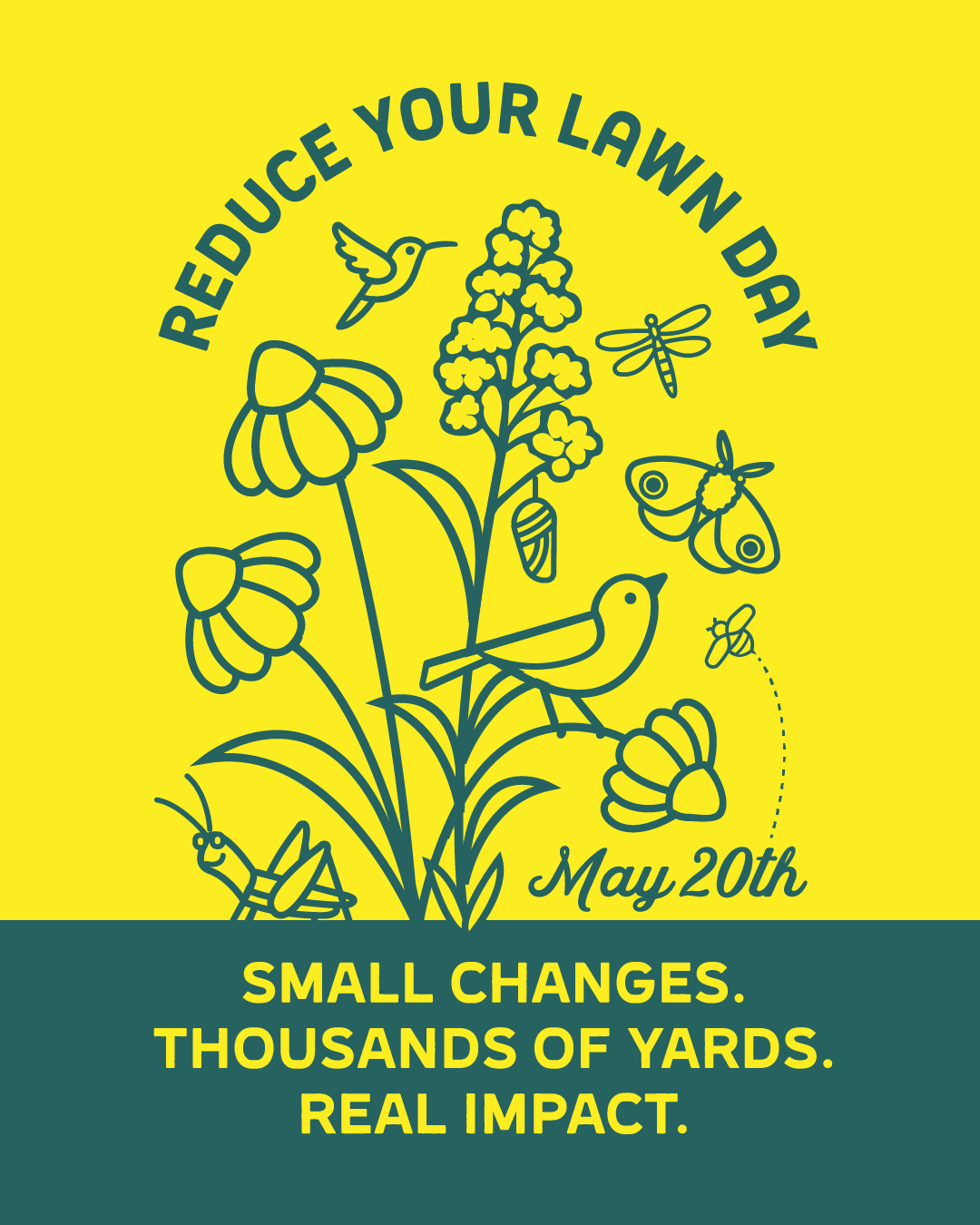
The growing movement encourages pollinator-friendly landscapes, native plants, flowering lawns, and waterwise lawn alternatives.
SHELBURNE, VT, UNITED STATES, May 19, 2026 /EINPresswire.com/ — Reduce Your Lawn Day is a month-long national movement encouraging homeowners to replace portions of traditional turf lawn with sustainable lawn alternatives, including native wildflowers, pollinator gardens, flowering lawns, microclover, perennial gardens, edible gardens, waterwise plants, and biodiversity-supporting landscapes.
What began as a grassroots awareness campaign has evolved into a growing national movement helping homeowners rethink traditional lawns and embrace more sustainable, pollinator-friendly landscapes.
As drought conditions, pollinator decline, and interest in sustainable landscaping continue shaping homeowner priorities nationwide, organizers say the movement is resonating far beyond traditional gardening audiences.
THE MOVEMENT CONTINUES TO GROW
Now entering its third year, Reduce Your Lawn Day has expanded into a month-long movement throughout May, inspiring homeowners across the country to transform portions of conventional lawn into vibrant ecosystems that support pollinators, conserve water, increase biodiversity, and reconnect people with nature.
The initiative, led by American Meadows and nationally recognized gardening expert Kathy Jentz, author of Groundcover Revolution, continues gaining momentum through support from dozens of gardening educators, environmental advocates, designers, nonprofits, and mission-aligned organizations.
Together, these advocates are helping expand awareness around sustainable landscaping, pollinator gardening, native plants, edible gardens, ecological lawn alternatives, and climate-resilient landscaping.
Since launching in 2024, participants have collectively pledged and converted millions of square feet of traditional turf into ecologically beneficial landscapes filled with native wildflowers, pollinator habitat, edible gardens, flowering groundcovers, perennial gardens, drought-tolerant plants, and biodiversity-supporting garden spaces.
Organizers say the pledge campaign continues growing each year as more homeowners seek practical, achievable ways to support biodiversity and reduce resource-intensive landscaping practices.
“Reduce Your Lawn Day was never really intended to be just about one day,” said Tabar Gifford, Master Gardener, Certified Pollinator Steward, and Partnership Cultivator at American Meadows. “It’s about helping people realize that our yards can become living ecosystems. Even the smallest changes — planting clover instead of conventional turf, adding native flowers along a walkway, growing herbs and vegetables, or replacing part of a lawn with pollinator-friendly groundcovers — can create meaningful environmental impact.”
WHY AMERICANS ARE RETHINKING TRADITIONAL LAWNS
Across the United States, traditional turf lawns remain one of the largest irrigated crops in the country despite providing relatively little ecological value.
According to widely cited estimates referenced by campaign organizers:
• More than 40 million acres of lawn exist across the United States, making turfgrass the nation’s largest irrigated crop
• An estimated 800 million gallons of gasoline are used annually on lawn equipment, totaling more than $2.4 billion in fuel costs
• Gas-powered lawn equipment contributes up to 5% of U.S. air pollution
• Modern turfgrass lawns surged in popularity during the Victorian era alongside the invention of the lawnmower, despite today’s growing environmental and water conservation concerns
“What we think of as a ‘normal’ lawn is actually a relatively modern cultural invention,” Gifford said. “Nature has always done a better job creating resilient, beautiful, living landscapes than monoculture turf ever could. Sustainability really does begin in your own backyard.”
As concerns around drought conditions, pollinator decline, biodiversity loss, water conservation, and climate resilience continue growing nationwide, organizers say more homeowners are looking for alternatives that are both beautiful and environmentally beneficial.
“For decades, the American lawn was treated as the default,” Gifford said. “But people are starting to ask bigger questions about how their outdoor spaces could do more. Could they support pollinators? Could they conserve water? Could they create habitat, reduce maintenance, and bring more beauty and joy into everyday life? The answer is yes.”
BETTER ALTERNATIVES TO TRADITIONAL TURF
The movement encourages homeowners to start small and participate in ways that feel approachable for their space, budget, and lifestyle. Suggested alternatives include native wildflowers, pollinator gardens, perennial gardens, edible landscaping, flowering lawns, microclover lawns, low-mow fescue blends, native groundcovers, creeping thyme, habitat gardens, and other waterwise landscaping solutions.
“Not every yard needs to become a wild meadow,” Gifford said. “For some people, replacing a section of turf with microclover or flowering groundcovers may be the perfect solution. Others may want more native flowers, perennial gardens, edible gardens, or pollinator habitat. This movement is about creating healthier relationships between people and the landscapes they care for.”
“There’s this misconception that ecological gardening means giving up beauty or functionality, and that could not be further from the truth,” Gifford added. “Flowering lawns can still feel soft and inviting. Groundcovers can be lush and walkable. Edible gardens can be joyful and productive. Native plants can absolutely be breathtaking. We’re helping people expand their imagination for what a modern landscape can look like.”
SMALL CHANGES CREATE COLLECTIVE IMPACT
Throughout May, homeowners are invited to take the Reduce Your Lawn Day pledge and participate in a nationwide celebration of sustainable gardening and habitat restoration.
Organizers emphasize that the campaign is intentionally solutions-based and focused on progress over perfection.
“This movement succeeds because it makes environmental action feel achievable,” Gifford said. “You do not have to remove your entire lawn overnight to make a difference. One garden bed matters. One patch of clover matters. One pollinator habitat matters. Collectively, those small changes add up to something incredibly powerful.”
“What I love most about gardening is that it transforms both landscapes and people,” Gifford added. “Gardens reconnect us to seasons, to pollinators, to soil, to community, and to hope. Every time someone replaces a little bit of lawn with living habitat, they’re participating in something restorative. They’re helping create healthier ecosystems right outside their door.”
Kathy Jentz, nationally recognized gardening expert, author of Groundcover Revolution, and host of the GardenDC Podcast, said the movement’s continued growth reflects a broader cultural shift in how Americans think about lawns and outdoor spaces.
“People are realizing that lawns are not the only option,” Jentz said. “Wildflowers, native plants, flowering groundcovers, edible gardens, habitat corridors, and pollinator-friendly landscapes can all be beautiful, deeply personal, and environmentally meaningful. The Reduce Your Lawn Day movement is helping people feel empowered to take that first step.”
EDUCATION AND COMMUNITY PARTICIPATION
Supporting organizations and mission-aligned partners across the gardening industry are also helping expand participation through educational resources and a nationwide giveaway designed to help homeowners take the next step in transforming their landscapes.
Giveaway partners include Timber Press, Online Landscape Designs, Power Planter, Womanswork, High Country Gardens, Kathy Jentz, and American Meadows, with resources focused on pollinator gardening, ecological landscaping, habitat restoration, sustainable lawn alternatives, and gardening education.
“Education is one of the most powerful tools we have,” Gifford said. “Once people discover how much life a small pollinator patch can support, or how much water they can save with better lawn alternatives, it changes the way they see their entire landscape. Gardening becomes more than decoration. It becomes stewardship.”
Participants can take the Reduce Your Lawn Day pledge, enter the giveaway, and explore educational resources focused on pollinator gardening, lawn alternatives, native plants, edible landscaping, flowering lawns, perennial gardens, and waterwise gardening throughout the month of May.
Organizers hope this year’s campaign inspires even more homeowners to see their yards not simply as lawn space, but as opportunities to support pollinators, conserve water, restore habitat, and reconnect with nature.
To learn more, participate in Reduce Your Lawn Day, or explore sustainable landscaping resources, visit www.reduceyourlawnday.com
Also, if you missed the "From Grass to Glory: 2026 Lawn-to-Meadow Guide" webinar live, it is now available on YouTube at https://youtu.be/FK9eDS6rKgA?si=QvdhHzvt8vwdXhct


No comments:
Post a Comment