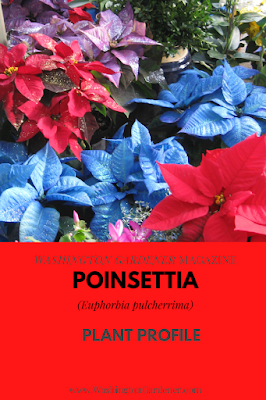
Poinsettia (Euphorbia
pulcherrima) are perennial flowering shrubs that can grow to 10 feet tall
in their native Mexico. Poinsettias were introduced into the United States in
1825 by Joel Poinsett.
They are part of the Euphorbia family. Many plants in
this family ooze a milky sap. Despite their reputation, poinsettias are not
poisonous. A study at Ohio State University showed that a 50-pound child who
ate 500 bracts might have a slight tummy ache.
To choose the freshest poinsettia, look at the very
center of the bracts or leaves for a cluster of very small green “buds” with a
small amount of yellow, this is the actual flower. It is a direct indication of
the age of the plant. The tighter the buds with small amounts of yellow showing
can mean a longer shelf life at home.
After you purchase your plant, make sure it is wrapped
properly and take it directly home, because exposure to low temperatures even
for a few minutes can damage the bracts and leaves.
You can make your poinsettia last longer through the
holiday season by placing them in an area that gets bright, indirect sun. This
area should also be free of drafts or direct heat sources.
Water the plant by removing the foil or decorative pot
cover. Place the plant in the sink and give the soil a good soaking. After the
plant has stopped leaking water, place the plant back into its foil pot cover
or decorative pot.
In recent years, poinsettias are being bred in many color
ranges, patterns, and leaf shapes. There are over 100 varieties of poinsettias
available. Most sales are still of the classic red kinds; followed in
popularity by white and then pink.
Florists and garden centers are also applying paints to
the bracts to come up with fun color combinations (like blue and purple) as
well as glittering them. Another fun practice is to train poinsettias into tree
forms and topiaries
If you keep it past the holiday season, apply a
houseplant fertilizer once a month. Do not fertilize when it is in bloom. After
the New Year, cut it back to the green leaves, then new growth will sprout and
then you can condition it to have in display for the next holiday season.
Poinsettias: You Can Grow That!
The video was produced
by Washington Gardener Magazine.
Audio, Video, Photos, and Text by Kathy Jentz
Editing by Melinda Thompson
➤ If you enjoy this video, please give it a thumbs up
and subscribe to our Youtube
channel (thank you!)
➤Remember to TURN ON notifications to know when our new
videos are out
The 4th of every month is "Garden Bloggers: You Can Grow That" Day. Being the holiday season, I decided I'd dispell some myths about growing Poinsettias and show you how easy they can be.
Big box stores are not the first source of information we here at Washington Gardener Magazine think of when researching plant matters, but when we wanted to learn all about poinsettia care, we knew that Pete Drake, a Certified Nursery Consultant with the Annapolis Home Depot, was our go-to expert on the subject because of the thousands upon thousands they grow and sell. Here is what Pete told us:
1. How do you choose the freshest poinsettia? The first thing is to take the plant out of the sleeve, then look at the very center of the red bracts or leaves. You are looking for a cluster of very small green “buds” with a small amount of yellow, this is really the flower. This is a direct indication of the age of the plant. The tighter the buds with small amounts of yellow can mean a longer shelf life at home.
2. How do you make your poinsettia last through the holiday season? Place them in an area that gets bright, but not direct sun unless the window is facing east. This area must also be free of drafts or direct heat sources. When it becomes time to water, remove the plants “pants” (the foil or decorative pot cover). Place the plant in the sink and give it a good amount of water. For a 6” plant two cups of water should work or 5-7 seconds with a sink faucet sprayer. After the plant has stopped leaking water, place the plant back into its foil pot cover or decorative pot.
3. What are the newest trends in poinsettias? One of the most common things florists and garden centers are doing is the application of paints to the bracts to come up with different color combinations. Another trend is the many growers who are hybridizing poinsettias to get different-shaped leaves. Others are making new poinsettias with different shades of the same color on the same bract.
Garden Bloggers You Can Grow That! Day was started by C. L. Fornari of Whole Life Gardening
because she believes “Gardening is one of the most life-affirming
things we can do.…We need to thoroughly saturate people with the belief
that plants and gardening are worth doing because of the benefits
gained.” Garden bloggers who agree post about something worth growing on
the fourth day of every month. Read this month’s You Can Grow That! posts.
You Can Grow That! is
a campaign created by garden writer and master gardener C. L. Fornari.
On the fourth of each month participating garden bloggers will write
about something you can grow. Stop by the You Can Grow That! Facebook page to read all of the posts.