
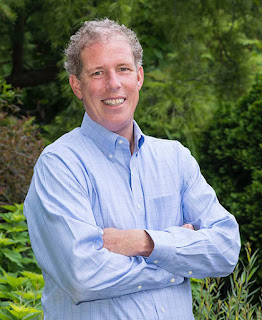
In this episode, we talk with Andrew Bunting, Vice President of Public Gardens and Landscapes at the Pennsylvania Horticultural Society, all about magnolias. The plant profile is on Heaths and Heathers and I share what's going on in the garden as well as some upcoming events.
BTW,
Show Notes:
1:01 Meet Vice President of Public Gardens and Landscapes Andrew Bunting from the Pennsylvania Horticultural Society!
1:35 Signs of spring Andrew is noticing
2:23 “We’ve been kind of teased into thinking that spring should start in February…” — Andrew
3:06 Andrew talks about the earliest blooming magnolias
3:53 What most people think are petals on magnolias are actually tepals!
4:27 Magnolia stellata can be the size of a shrub or tree
7:03 “If I was going to pick 10 of my favorite magnolias, ‘Wada's Memory’ would be one of them.” — Andrew
7:44 Many magnolias are early bloomers
9:11 “If you could only grow one magnolia, it would have to be the saucer magnolia.” — Andrew
10:22 Kathy describes the saucer magnolias at the Enid A. Haupt Garden in DC
11:39 Andrew lists public gardens where you can see magnolias
15:02 Common names can be confusing
16:17 Andrews mentions magnolias called ‘The Girls’
17:34 “Pinkie… that’s one of my favorites.” — Kathy
18:29 There is a ‘Star Wars’ Magnolia!
21:31 “For a long period of time, the yellow magnolias were kind of the Holy Grail of the magnolia world.” — Andrew
22:54 Yellow magnolias can be very tall!
24:43 “If you were to collect all the yellow magnolias today, there’s got to be 75 different ones.” — Andrew
26:13 Andrew describes a magnolia tree with a fruity scent
27:58 Magnolia trees native to North America have tropical leaves
30:01 Andrew mentions tall magnolias — “The wild Magnolia grandiflora can get over a hundred feet tall.”
31:38 Magnolias can be found all over the world!
31:12 Kathy and Andrew discuss the “dry shade” caused by evergreen magnolias
36:23 Are deer a problem?
37:56 The real pest issue — magnolia scale
38:39 Kathy and Andrew discuss pruning magnolias and espalier
41:41 Kathy says she’s going to add the ‘Star Wars’ magnolia to her collection
43:43 Learn about Heath and Heathers in this week’s Plant Profile!
46:08 What’s new in the garden: ‘February Gold’ daffodils bloom and the interns planted seeds!
47:00 News in the gardening world: Maryland Home & Garden Show, Longwood Gardens opens restored Orchid House, cherry blossom peak bloom coming soon
49:01 Look forward to “The Urban Garden: 101 Ways to Grow Food and Beauty in the City” by Teri Speight and Kathy
49:55 Celebrate spring at the National Garden Bureau online book party
If you liked this episode, you may also enjoy listening to:
GardenDC Episode 60: Hydrangeas with Andrew Bunting
GardenDC Episode 6: Spring-Flowering Trees and Shrubs
The episode is posted at: https://anchor.fm/gardendc/episodes/Magnolias-e1f5mm3
- Apple: https://podcasts.apple.com/us/
podcast/gardendc/id1502631179 - Spotify: https://open.spotify.com/show/
5AsWArNpQo8OlzHoMDMSI8 - RadioPublic: https://radiopublic.com/
gardendc-G2ql5V - iHeartRADIO: https://www.iheart.com/podcast/269-gardendc-73615877/
- aCast: https://play.acast.com/s/gardendc
- Amazon: https://music.amazon.com/podcasts/776561ca-75d6-4c63-833b-7dafedf57a72/GardenDC
- Audible: https://www.audible.com/pd/GardenDC-Podcast/B08JJNZBMX
- Breaker: https://www.breaker.audio/
gardendc - Bullhorn https://www.bullhorn.fm/gardendc
- Chartable: https://link.chtbl.com/GardenDC
- Castbox: https://castbox.fm/channel/GardenDC-id2691161?country=us
- Ivy: https://ivy.fm/podcast/gardendc-940013
- Listen Notes: https://lnns.co/VIfcBjWRnw6
- Pandora: https://www.pandora.com/
podcast/gardendc/ - PocketCasts: https://pca.st/9phvd8bk
- Podcast Addict: https://podcastaddict.com/podcast/2629285
- Podfollow: https://podfollow.com/GardenDC
- Podlink: https://pod.link/GardenDC
- Podchaser: https://www.podchaser.com/podcasts/gardendc-1137444
- Overcast: https://overcast.fm/
itunes1502631179/gardendc - Reason: https://reason.fm/podcast/gardendc
- Stitcher: https://www.stitcher.com/show/gardendc
- TuneIn: http://tun.in/pj7Sb
- Vurbl: https://vurbl.com/station/gardendc/
- YouTube: https://youtube.com/washingtongardenermagazine
- Google Podcasts at this link (note that currently, this link will only work on Android devices.)
We welcome your questions and comments! You can leave a voice mail message for us at: https://anchor.fm/gardendc/message Note that we may use these messages on a future episode.
And be sure to leave us a 5-star review on your favorite platform so other gardeners can find us too!
Episode Credits:
Host and Producer: Kathy Jentz
Editing and Show Notes: Dorvall Bedford
Editing and Show Notes: Dorvall Bedford
PIN THIS FOR LATER!


