Friday, December 09, 2022

Fenton Friday: Broccoli & Blues

By Jaime Breeden

There is little in this world that cannot be cultivated with time, effort, and the right resources. This is not a mantra that I live by regularly, but it’s something that I try to have in the back of my head when trying new things. It helps to dull the blow of failure. 


I have regularly heard people say it’s hard to actually "fail" at gardening because you just learn from what went right and what didn’t. It’s also very possible that what takes out your plants was Mother Nature deciding to bring on the frost earlier than you’d anticipated. 


Since September, I’ve been the proud parent of a batch of golden Swiss Chard, grown within the relative safety of a container, and some Broccoli, planted in directly in the soil. And as of today, I am happy to report that despite everything I’ve said about my lack of experience over the past semester, I only managed to kill one of the plants I’d been growing.


Washington Gardener Magazine's editor Kathy Jentz has been an incredible coach, as I’m sure you could have guessed. Her willingness to put up with endless questions combined with her encyclopedic knowledge was invaluable to a newcomer like me. I figure I’d still be looking at a barren lot had

she not been around to guide me through my first real growing experience.


Honestly the most, challenging thing about growing these guys has been the time it takes to know

whether or not what you've got growing is going to actually bear fruit. Or, in this case, vegetables. Barring the idea of the cover cloth to protect the broccoli from the dangers of the menacing cabbage looper moth, a lot of my watering, and general care was intuitive.


To this day, the broccoli has only produced a single, small head. The size isn’t the issue, according to

Kathy, it’s supposed to be that small, but after several months of waiting for anything to come out of the crop, I’ll only be able to take home a single floret. There are other heads starting to form, but they likely won’t be ready for harvesting for another couple of weeks.
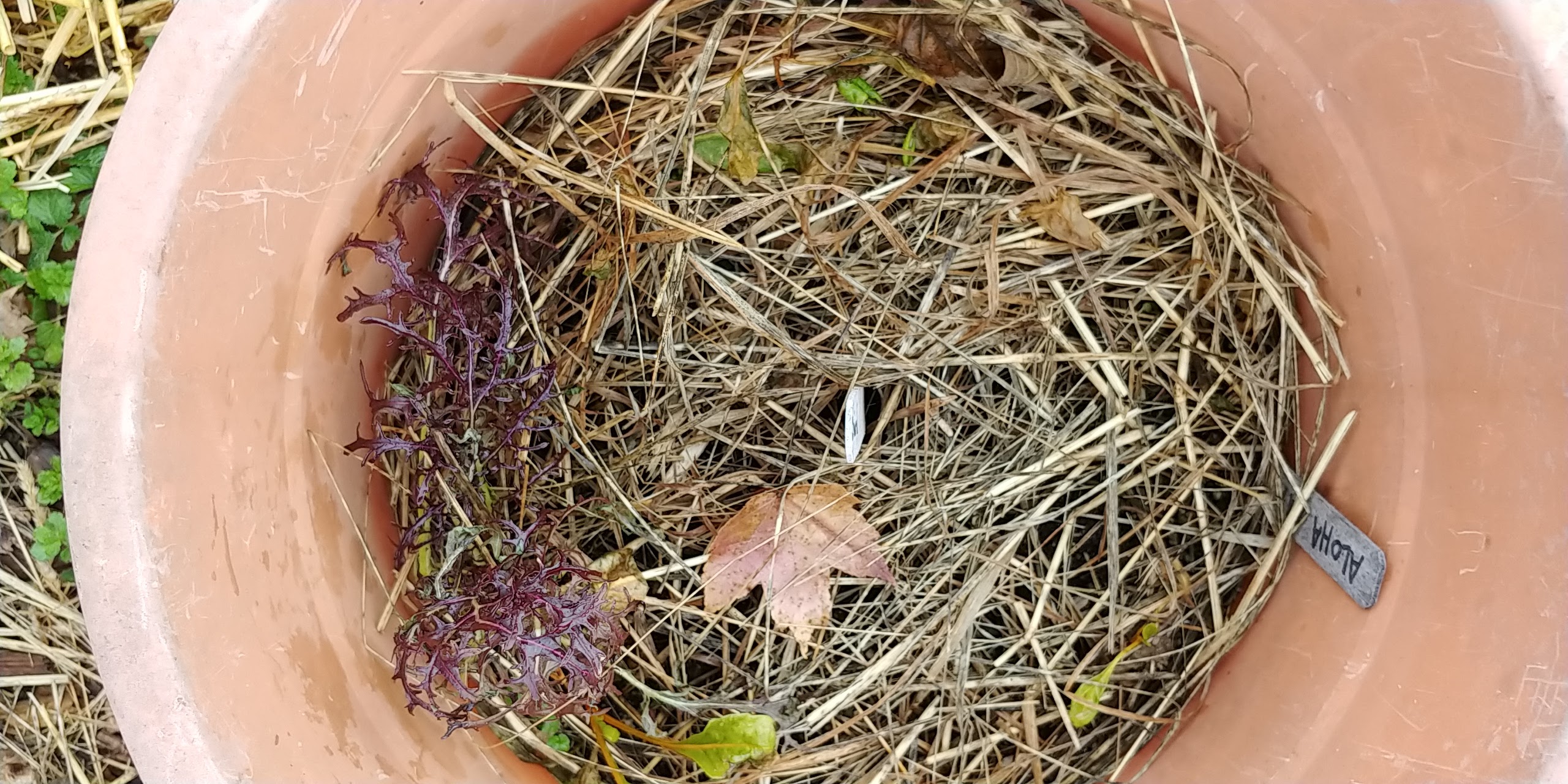

The Swiss Chard, on the other hand, didn’t give over any bounty. None of the seeds got beyond a few

small leaves, and while it may have technically been edible there wasn’t enough to do anything beyond topping a salad with the sprouts. I chalk it up to under-insulating the plant prior to the first frost, and an unknown foreign plant (some kind of red lettuce?) lurking beneath the soil. 


In all, I envy the rest of you gardeners, spending so many hours of your day watching such beautiful

things grow by your own hands. Had I the patience and "sticktoitiveness," I would surely try to get right back on the horse, but winter is upon us and now it is time to rest and learn.


About the Author: Jaime Breeden is a fourth-year journalism student at the University of Maryland, College Park and an intern this fall session with Washington Gardener.

About Fenton Friday: Every Friday during the growing season, I'll be giving you an update on the community garden plot at the Fenton Street Community Garden just across the street from my house in zone 7 Mid-Atlantic MD/DC border. I'm plot #16. It is a 10 ft x 20 ft space and this is our 11th year in the garden. (It opened in May 2011.) See past posts about our edible garden by putting "Fenton" into the Search box above.

Thursday, December 08, 2022

Discuss "The Earth in Her Hands" with the Washington Gardener Magazine Garden Book Club

 For our next Garden Book Club selection, we will be reading: 

You can order it new or used at our Amazon link: https://amzn.to/3Y8nxRE


"In this beautiful and empowering book, Jennifer Jewell introduces 75 inspiring women. Working in wide-reaching fields that include botany, floral design, landscape architecture, farming, herbalism, and food justice, these influencers are creating change from the ground up." -Amazon.com

Our Winter 2023 club meeting will be on Thursday, February 9 from 6:30-8pm ET via Zoom. To join us, register here: 
https://us02web.zoom.us/meeting/register/tZUkdOuspzwtHdzK8_VkBgXSThn6rZ5IguKQ 

The Washington Gardener Magazine's Garden Book Club meets quarterly via Zoom and is free and open to all. We will announce the details of each upcoming meeting about two months in advance. Please check back on this blog for schedule updates and announcements.

Want to read ahead? The next book club selections are:
PIN THIS FOR LATER!

Wednesday, December 07, 2022

Amaryllis Plant Profile


Amaryllis Plant Profile

Amaryllis (Hippeastrum sp.) is a large flowering bulb that is commonly grown indoors for holiday decoration. It is native to Central and South America and includes 90 species and over 600 cultivars.

The flower colors can range from the classic red to white, salmon, pink, or creamy yellow. Some flowers are very large, others are more delicate and narrow types. They also come in single- and double-flower varieties.

As many as six flowers will bloom on a single stem. In general, the larger the flower bulb, the more flowers it will produce.

To prompt the Amaryllis to start to grow, place the bulb in a container filled with lukewarm water for an hour. You can then plant the Amaryllis bulb in a container filled with sterile potting mix. Be sure to leave at least the top third of the bulb above the soil level and to choose a container with good drainage that is only an inch or two wider than the bulb itself. Amaryllis like to fit snugly in their pots. Because the flowers can be top heavy, pick a pot that has some weight and heft to it.

Amaryllis prefer a room temperature between 68 and 74 degrees. They also need sufficient light to bloom. If it doesn’t get enough, its stems will stretch out and need support. Rotate the pot a quarter turn each time you water the plant.

After the flowers finish blooming, the bulbs need a period of recovery and rejuvenation. Cut off the flower stalks, but leave the foliage intact and reduced watering. They can be grown as a houseplant and then placed out in the summer to gather more energy for blooming again in the winter. Re-pot them every 3 to 4 years.

If you live in USDA zones 8-11, they can be planted outdoors in the spring and stay there year-round.

Bring them in before the weather gets cold and discontinue watering. Place them in a cool, dark place to remain dormant for at least two months. Then take them out of storage, water them thoroughly, and put in a sunny spot again to start the bloom cycle over.

The National Garden Bureau has declared 2023 as the year of the Amaryllis.

Amaryllis: You Can Grow That!

The video was produced by Washington Gardener Magazine as part of our Plant Profile series for Mid-Atlantic USA gardeners.

Audio and text by Kathy Jentz

Video and editing by Brandie Bland

 If you enjoy this video, please give it a thumbs up and subscribe to our Youtube channel (thank you!)

Remember to TURN ON notifications to know when our new videos are out

 FIND Washington Gardener Magazine ONLINE

WashingtonGardener.blogspot.com

http://twitter.com/WDCGardener

https://www.instagram.com/wdcgardener/

~ Facebook.com/WashingtonGardenerMagazine

~ Podcast: GardenDC

PIN THIS FOR LATER!


Monday, December 05, 2022

Monday Thoughts: “Someone's sitting in the shade today because someone planted a tree a long time ago.” - Warren Buffett

“Someone's sitting in the shade today because someone planted a tree a long time ago.”  

- Warren Buffett


Saturday, December 03, 2022

GardenDC Podcast Episode 131: Garden Trends of 2023


In this episode of GardenDC: The Podcast about Mid-Atlantic Gardening, we talk with Katie Dubow of Garden Media Group all about 2023 gardening trends. The plant profile is on Poinsettia and we share what's going on in the garden as well as some upcoming local gardening events in the What's New segment. We close out with Dr. Allan Armitage*, who returns to share the Last Word on Solution Gardening.

Note that this is the last episode of our season three year. We will be back in January 2023 with many more garden experts and inspiration for the coming year.


BTW, YOU can become a listener supporter for as little as $0.99 per month! See how at: https://anchor.fm/gardendc/support.

Show Notes: 01:15 Reintroducing Katie Dubow of Garden Media Group 02:36 Looking back at the 2022 forecast 08:20 Looking forward to 2023 12:45 The Tesla effect 17:50 Gardening, housing, and "the backdoor revolution" 24:29 Talk about PlantTok 33:40 "It’s all Greek to me" 41:20 The color of the year 44:31 What goes into determining these trends 48:40 A sneak peek at next year's trends 50:16 This week’s plant profile is… Poinsettias! 53:07 What’s new in the garden? New blooms and broccoli heads 53:28 What’s new around town? Holiday herbs & spices, Christmas trees, light shows, and holiday exhibitions 57:33 The Last Word on Solution Gardening by Dr. Allan Armitage

*Dr. Allan Armitage is also offering a discount for free domestic shipping when ordering his books expiring on December 6, 2022, at allanarmitage.net enter code LAST WORD at checkout.

If you liked this episode, you may also enjoy listening to:


We welcome your questions and comments! You can leave a voice mail message for us at: https://anchor.fm/gardendc/message Note that we may use these messages on a future episode.

And be sure to leave us a 5-star review on your favorite platform so other gardeners can find us too!

Episode Credits:
Host and Producer: Kathy Jentz
Editing: Brandie Bland
Show Notes: Jaime Breeden

PIN THIS FOR LATER!

Friday, December 02, 2022

Fenton Friday: Kale Yeah!


By Brandie Bland

During my internship with Washington Gardener Magazine this fall, I grew Black Spanish Radish (Raphanus sativus) and Blue Kale (Brassica oleracea). Before this, I had experience growing house plants and herbs in my kitchen window, but I had never grown anything in an edible garden.


My first day in the Fenton Street Community Garden plot was intimidating seeing all of the bright colors and bounty from the different plots, I was scared that I would mess something up. But with the guidance of Kathy Jentz, Washington Gardener’s editor, I planted my seeds. 


At the beginning of September, I planted my radish and kale seeds, watered and labeled them and crossed my fingers that there would be signs of life. 


Every Tuesday, Kathy, myself, and the other intern met in the garden doing various tasks. By mid-September, to my surprise, I could see small green sprouts above the soil in my radish and kale rows. 


After the seeds germinated, I spent a lot of time watering, weeding,and thinning the individual sections to address overcrowding. 


By October, the “shoulders'' of my radish were peeking above the soil which meant it was time to harvest them. Because I have a lot of knowledge about produce from my time working in the produce department of a local organic grocery store, I was expecting my radish to be big and round. Surprisingly, they were small- to medium-sized and weren’t spicy like the black radish I’ve tasted before. These radishes were mild and tasted like cabbage. I enjoyed them with a Greek yogurt veggie dip I learned to make from my old neighbor, who I called Yaya Sophia. 


I harvested some of my kale leaves also at the end of November and I’m excited to use them in a recipe. 


Growing edibles was not as difficult as I thought it would be and I discovered a peace I have never felt before while gardening. I’m excited to take everything I have learned and apply it to my own garden which I plan to start in the spring. 


About the Author: Brandie Bland is a senior multi-platform journalism major in the Philip Merrill College of Journalism at the University of Maryland, College Park. She is an intern this fall with Washington Gardener.

About Fenton Friday: Every Friday during the growing season, I'll be giving you an update on the community garden plot at the Fenton Street Community Garden just across the street from my house in zone 7 Mid-Atlantic MD/DC border. I'm plot #16. It is a 10 ft x 20 ft space and this is our 11th year in the garden. (It opened in May 2011.) See past posts about our edible garden by putting "Fenton" into the Search box above.

Wednesday, November 30, 2022

Paperwhite Plant Profile

Paperwhite Plant Profile

Paperwhites (Narcissus papyraceus) is a white-flowering daffodil relative that is hardy to zones 8-11.

Forcing these bulbs into bloom is a great holiday season project for beginning gardeners and children. These bulbs are of Mediterranean origin and come pre-chilled for you so they are virtually ready to "pop" into bloom once you place them in water. 

They are generally inexpensive, around $1-2 each, so you can buy several and pot them up as gifts for everyone on your list. 

I like to place them individually in votive candle holders or heavy-bottom rocks glasses then line them up on windowsills, down the middle of a dining table, along the fireplace mantel, or singly next to the bathroom sinks. You can also take a large glass bowl or tall vase and place several bulbs in together to make a small “forest” of paperwhites. I have used fishbowls, teapots, and old watering cans. Really anything that is water-tight can be used, so look around your home for inspiration.

To anchor the bulbs in and prevent them from toppling over as they grow leggy, you can place the bulbs in a variety of decorative media from aquarium pebbles to glass marbles. (You can always use potting soil to plant them in.) I like to use hydrating water beads that you can get from florist supply and craft sources. They come in many shades, but I tend to stick with the classic clear ones. Whatever media you use, keep the water level only up to about the bulb's bottom hip area, so as not to rot it. If your home is as dry as mine in winter, you will need to top off the water every few days, so keep an eye on that.

Once "potted," place them in a sunny window until the leaves emerge and a stalk with flower bud started to form (usually about 10 days to 2 weeks), then place them wherever you'd like to display them.

After the flowers start to fade, pull the bulbs out of the water and pry off any marbles/stones/glass that you want to re-use next year then throw out the whole plant in your compost pile. In our Mid-Atlantic USA region, they are not winter-hardy, so there is no need to try and plant or save them for next season. 

Warning! The scent of paperwhite blooms is a love/hate thing. I personally fall on the "not-my-favorite smell" end of things, so I keep paperwhites in well-ventilated rooms and out of any bedrooms. If you really cannot stand the scent, there are paperwhite varieties that are lighter in fragrance than the mass-produced 'Ziva' that you find everywhere. These include 'Inbal' and 'Galilee.'

Paperwhites: You Can Grow That!

The video was produced by Washington Gardener Magazine as part of our Plant Profile series for Mid-Atlantic USA gardeners.

 
Audio and text by Kathy Jentz
Editing by Brandie Bland
Videography by Jaime Breeden
 

 If you enjoy this video, please give it a thumbs up and subscribe to our Youtube channel (thank you!)

Remember to TURN ON notifications to know when our new videos are out

 FIND Washington Gardener Magazine ONLINE

WashingtonGardener.blogspot.com

http://twitter.com/WDCGardener

https://www.instagram.com/wdcgardener/

~ Facebook.com/WashingtonGardenerMagazine

~ Podcast: GardenDC

PIN THIS FOR LATER!

Featured Post

Holiday Gifts for Gardeners ~ Top Gardening Gifts ~ 21+ Cool Gardening Gift Ideas

The holiday season is here and I bet you have a gardener on your gift list, so we've   updated   our annual a Holiday Gifts for Gardener...

Most Popular Posts